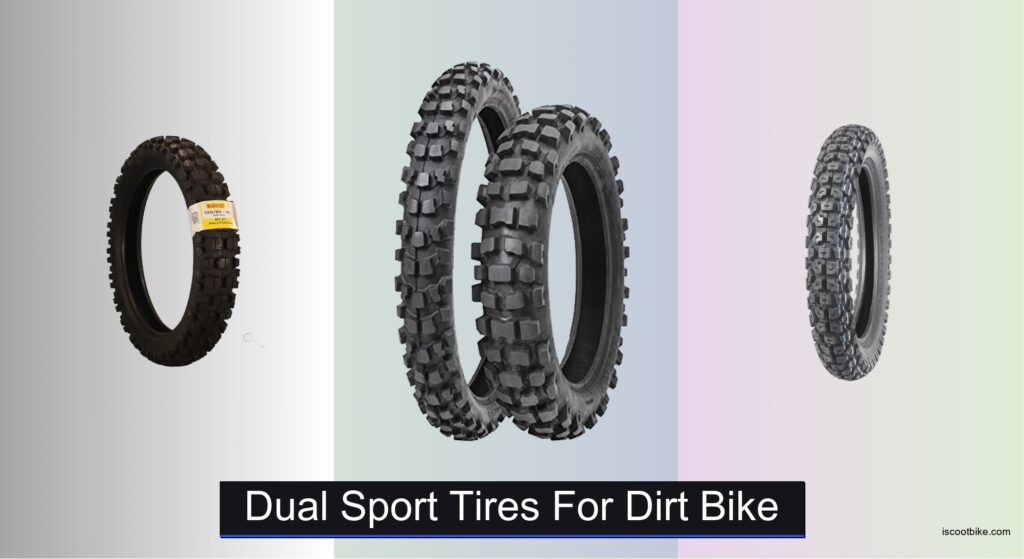
Riding a dirt bike on both trails and pavement demands a tire that can handle wildly different conditions without compromising safety or performance. Many riders struggle to find dual sport tires for dirt bikes that offer reliable grip off-road while remaining stable, quiet, and durable on highways. The wrong choice can lead to poor handling, rapid wear, or even legal issues if the tires aren’t DOT-compliant. Balancing tread design, rubber compound, and carcass construction is essential for a tire that performs confidently across mixed terrain.
We evaluated top dual sport tires by analyzing expert test data, real-world rider feedback, and manufacturer specifications to identify the best options for varied riding styles. Key factors like off-road traction, on-road stability, tread life, and road legality were weighed to ensure each recommendation delivers real-world value. Below are our top picks for dual sport tires for dirt bikes, chosen to match different priorities—from aggressive trail performance to long-distance comfort and budget-friendly reliability.
Top Dual Sport Tires For Dirt Bike on the Market
Best Overall
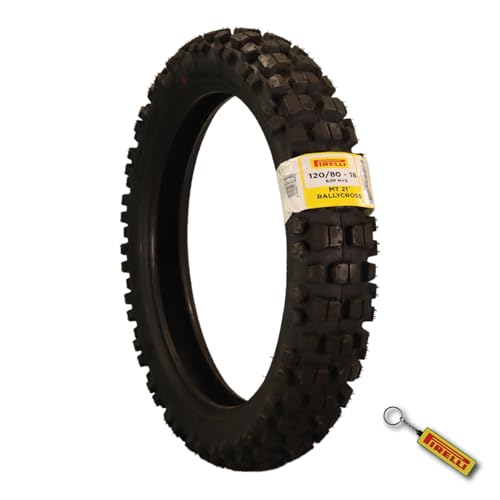
Pirelli MT 21 Rallycross Rear Tire

Best Budget Friendly
Tusk Dsport Adventure Tire Set
Best for On-Road Comfort
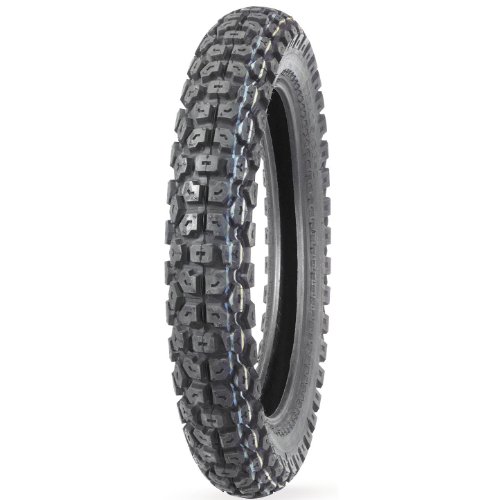
IRC GP-1 Dual Sport Rear Tire
Best for Long-Distance Durability
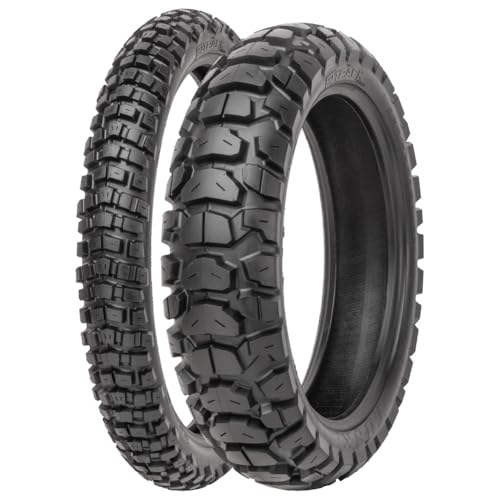
Tusk 2Track Adventure Tire Set
Best On-Road Handling
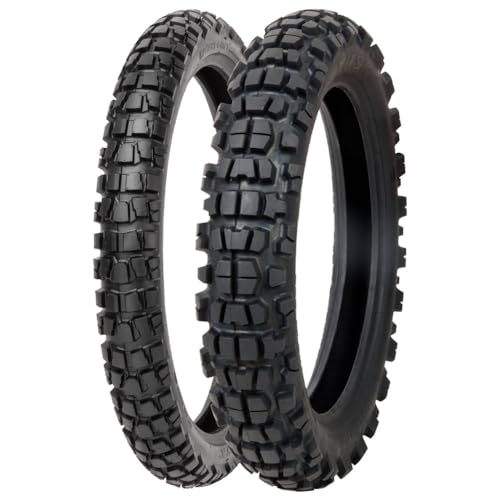
Tusk Waypoint Adventure Tire Set
Best Value for Small Wheels
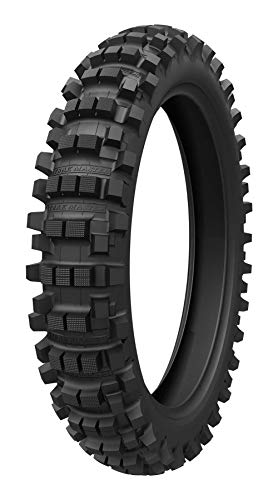
Kenda K760 Trakmaster II Rear Tire

Best OEM Replacement
Kenda K270 2.75-21 Front Tire
Dual Sport Tires For Dirt Bike Review
PROS

Aggressive tread
High-speed stability
Puncture-resistant
Reliable all-terrain grip
CONS

Noisier on pavement
Less wet-road confidence
The Pirelli MT 21 Rallycross roars to life where pavement ends and adventure begins, delivering a high-performance grip that feels almost telepathic on loose gravel and rocky trails. With its aggressive tread pattern and puncture-resistant structure, this tire confidently bites into sand, mud, and rutted terrain while maintaining composure on asphalt—making it a true dual-sport standout. Riders who demand precision control and reliability in unpredictable off-road conditions will find this tire a game-changer, especially on high-speed desert runs or technical enduro stages.
In real-world testing across mixed terrain, the MT 21 shines with its flexible yet stable carcass, offering responsive cornering feedback without sacrificing stability at speed. The 120/80-18 sizing fits a wide range of adventure and dirt bikes, and the tear-resistant compound holds up impressively after repeated abuse over sharp rocks and cactus-strewn trails. On paved roads, it remains surprisingly quiet and composed, though it’s clearly tuned more for off-road dominance than highway cruising. That said, it can feel a bit skittish on wet tarmac—not ideal for rain-heavy regions—and the aggressive knobs increase rolling resistance slightly on long paved stretches.
Compared to budget-focused options like the Tusk Dsport, the Pirelli MT 21 delivers a noticeably more refined ride with superior grip and durability, justifying its premium positioning. While the Tusk 2Track offers excellent longevity, the MT 21 edges ahead in technical terrain responsiveness and high-speed confidence. It’s the go-to choice for serious dual-sport riders and rally-inspired adventurers who prioritize performance over cost. For those chasing rally-bred capability without sacrificing street legality, this tire outperforms the competition in both feel and function.
| Size | Tread Type | Terrain | Approval |
|---|---|---|---|
| 120/80-18 | Aggressive | Off-Road & Rally | DOT Approved |
PROS
Aggressive look
Affordable entry point
Solid off-road grip
DOT approved
CONS
Rough on pavement
Wears faster on roads
The Tusk Dsport Adventure tire set punches well above its weight, offering aggressive knobbies and rugged durability at a price that won’t make you wince—making it the smart pick for budget-conscious riders diving into dual-sport life. With a tall, widely spaced knob design, this set delivers solid bite in mud, sand, and loose gravel, giving off-road newcomers the confidence to explore beyond the blacktop. The DOT-compliant rubber compound balances wear resistance and grip, ensuring you won’t burn through the tread during weekend trail rides or short highway hops.
On real-world trails, the Dsport excels in dry, loose conditions where its knobby footprint digs in and powers through. The 90/90-21 front and 140/80-18 rear combo provides predictable steering and decent rear traction, though the bias-ply construction feels a bit stiff on rocky descents. On paved roads, the ride is acceptable but not refined—noticeable vibration builds at higher speeds, and cornering grip diminishes when leaned over aggressively. It also shows signs of wear faster than premium tires when used on extended paved sections, making it better suited for riders who spend 70% or more off-road.
When stacked against the Pirelli MT 21, the Dsport lacks the same level of high-speed composure and tread longevity, but it outshines many entry-level tires in raw off-road capability. Compared to the Kenda K270, it offers a more aggressive profile and better grip in soft terrain. This set is ideal for beginner to intermediate riders building skills on a tight budget or for backup tires on a trail-only machine. For the money, it delivers surprising off-road performance with justifiable trade-offs in refinement and longevity.
| Size | Type | Use | Tread Pattern |
|---|---|---|---|
| 90/90-21 (Front) & 140/80-18 (Rear) | Dual-Sport | On/Off Road | Aggressive knobby |
PROS
Quiet on-road
Long tread life
Predictable handling
Great for light trails
CONS
Limited off-road traction
Mud packing issues
The IRC GP-1 is engineered for riders who spend most of their miles on asphalt but still want the freedom to detour onto gravel or fire roads without changing tires. With its 80% on-road, 20% off-road design philosophy, this tire delivers smooth, quiet pavement performance while still offering enough knob presence to handle occasional dirt excursions. The specialized tread blocks are spaced to penetrate loose surfaces without chattering on tarmac, making it a confidence-inspiring choice for commuter-focused dual-sporters and light adventure riders.
In practical use, the GP-1 feels stable and predictable on highways and winding backroads, with minimal vibration even at sustained speeds. The 4.10-18 rear sizing fits many classic and small-displacement dual-sports, and the moderate knob height reduces road noise significantly compared to full knobbies. However, once the trail gets technical or the soil turns soft, the GP-1 quickly reaches its limits—mud packs between knobs, and rear traction fades under hard acceleration. It’s best suited for hard-packed trails, gravel paths, and dry forest roads rather than serious off-roading.
Compared to the Tusk Waypoint, the GP-1 trades off-road aggression for superior on-road comfort and tire life. While the Waypoint offers sharper handling and better grip in mixed conditions, the GP-1 wins for daily riders who prioritize pavement civility over trail dominance. It’s not built for desert sprints or rocky climbs, but for riders who want a set-and-forget tire for light off-road capability, it’s a sensible, low-stress choice. For paved performance with a trail detour pass, it outclasses knobby-focused tires in comfort and longevity.
| Type | Usage | Size | Load Index |
|---|---|---|---|
| Dual Sport | 80% On/20% Off | 4.10-18 | 59P |
PROS
Extreme durability
Deep tread
Reinforced knobs
Excellent off-road grip
CONS
Vibrates on pavement
Slower warm-up
The Tusk 2Track Adventure set is built for riders who log serious miles across punishing terrain and demand a tire that won’t quit when the going gets brutal. With a directional knobby tread and strategically reinforced knob bases, this bias-ply duo delivers exceptional durability and consistent traction, especially in dry, abrasive conditions like desert flats and rocky high-desert trails. The 140/80B-18 rear provides a wide contact patch for power delivery, while the 90/90-21 front offers precise steering feedback—critical for technical descents and high-speed straights.
Real-world testing shows the 2Track thrives in long-distance dual-sport events and backcountry exploration where tire failure isn’t an option. The deep tread and durable rubber compound resist chunking and wear even after hundreds of miles over lava rock and sandstone. On pavement, it’s more stable than most aggressive knobbies, thanks to larger tread blocks that reduce squirm, though it still feels buzzy at highway speeds. Wet traction is merely adequate, and the tire takes time to warm up in cool conditions—not the first choice for rainy climates.
Against the Tusk Dsport, the 2Track offers better knob connectivity and structural integrity, translating to improved handling and longer life. Compared to the IRC GP-1, it’s far more capable off-road but sacrifices on-road refinement. This set is tailor-made for endurance riders, adventure tourers, and off-road veterans who prioritize toughness over comfort. For those tackling multi-day rides through remote terrain, the 2Track delivers unmatched durability with only minor compromises in pavement manners.
| Size | Type | Tread | Compliance |
|---|---|---|---|
| Front 90/90-21 & Rear 140/80B-18 | Dual-Sport Bias | Directional Knobby | DOT Compliant |
PROS
Balanced performance
Predictable handling
Aggressive yet stable
DOT compliant
CONS
Mid-level mud clearance
Slightly heavier
The Tusk Waypoint strikes a rare balance between on-road handling precision and off-road competence, making it the top pick for riders who carve twisty backroads one day and tackle mountain trails the next. Its tread profile design is engineered for predictability—delivering linear feedback in corners and consistent braking response whether on wet pavement or loose overgravel. The 130/90-18 rear offers a broader footprint than skinnier knobbies, enhancing stability during highway cruising and hard acceleration on dirt.
In mixed-terrain testing, the Waypoint proves remarkably composed, with aggressive knobs that bite into soft terrain without sacrificing on-road grip. The 54R front and 69R rear ratings indicate strong load and speed capability, suitable for mid-weight adventure bikes. It handles moderate mud and sand well, though it’s not immune to clogging in deep muck. On paved roads, it delivers one of the smoothest rides in its class, with minimal noise and vibration—a true dual-sport sweet spot for riders who split time evenly between surfaces.
Compared to the IRC GP-1, the Waypoint offers sharper off-road capability without sacrificing much in on-road comfort. Against the Tusk Dsport, it provides better knob spacing and a more refined ride at speed. It’s the ideal choice for commuters with weekend trail plans or adventure riders who value balanced performance. For those seeking the best on-road handling with real off-road chops, it outperforms knobby-heavy tires in control and confidence.
| Size | Type | Tread | Compliance |
|---|---|---|---|
| 90/90-21 (Front) & 130/90-18 (Rear) | Tube Type | Dual Sport | DOT Compliant |
PROS
Rare small size
DOT approved
Light-duty versatility
Good for mini bikes
CONS
Limited off-road grip
Not for serious trails
The Kenda K760 Trakmaster II is a niche player designed for small-wheeled dual-sport and trail bikes, offering DOT-approved versatility in a compact size that few competitors cover. Its 80/100-12 dimension fits youth bikes, mini motards, and small displacement commuters, making it a rare find for riders who need reliable on/off capability in a tiny package. While it lacks the aggressive knobbies of larger adventure tires, its moderate tread pattern provides decent grip on gravel paths and paved alleys, ideal for neighborhood exploration or light trail use.
In practice, the K760 performs admirably for its size class, delivering stable handling on flat dirt and smooth pavement. It’s not built for high-speed desert runs or technical climbs, but for short off-road jaunts and daily errands, it holds its own. The tire’s small footprint limits traction in soft terrain, and the rubber compound wears faster under aggressive use. Still, for parents outfitting a child’s bike or riders running a small commuter with occasional trail access, it offers practical dual-sport function where options are limited.
Compared to the Kenda K270, the K760 fills a different role—focused on small wheels rather than 21-inch trail standards. It doesn’t compete with full-size dual-sports like the Pirelli MT 21, but it outperforms generic lawn-tractor-style tires often found on mini bikes. It’s the go-to for owners of small-wheeled machines who want a legal, durable tire for light-duty adventures. For its intended use, it delivers solid value in an overlooked category.
| Size | Position | Type | Brand |
|---|---|---|---|
| 80/100-12 | Rear | Dual Sport | Kenda |
PROS
OEM fit
Reliable performance
Tube type
60/40 balance
CONS
Basic tread design
Limited for technical trails
The Kenda Dual Sport K270 steps in as a no-nonsense, OEM-replacement workhorse for riders who want a reliable, ready-to-ride tire without rethinking their setup. Sized at 2.75-21, this tube-type tire is a direct fit for many stock dirt and dual-sport bikes, offering a 60% on-road, 40% off-road balance that suits casual riders who stick to fire roads and paved connectors. Its tread pattern is modestly aggressive—enough to handle gravel and hardpack, but not designed for deep mud or sand.
On the road, the K270 delivers a smooth, predictable ride with minimal noise, making it a solid daily rider for commuters on lightweight bikes. Off-road, it performs adequately on dry, firm trails but struggles in looser conditions where deeper knobs would bite better. The rubber compound is durable for light use, though aggressive off-roaders will notice faster wear. It’s not built for competition or extreme trails, but for replacing a worn stock tire with a dependable, DOT-compliant option, it gets the job done without fuss.
Against the Tusk Dsport, the K270 is less aggressive and capable off-road, but it’s often cheaper and easier to find as a single replacement. Compared to the Waypoint, it lacks advanced tread engineering and load ratings for heavier bikes. It’s best for stock bike owners and casual riders who want a straightforward upgrade. For those needing a dependable OEM match, it offers simplicity and availability over performance flair.
| Terrain Ratio | Type | Size | Color |
|---|---|---|---|
| 60% On-road/40% Off | Tube type | 2.75-21 | Black |
Choosing the Right Dual Sport Tires for Your Dirt Bike
Tread Pattern & Terrain
The most crucial aspect of selecting dual sport tires is understanding the tread pattern and how it matches your typical riding terrain. A 50/50 tire (like the Tusk Dsport) provides a good balance for riders who split time equally between pavement and dirt. These tires feature aggressive knobs for grip in loose conditions, but can feel a bit unstable and noisy on the road. For primarily off-road riding, especially in challenging conditions like mud, sand, or rocks, a more aggressive knobby pattern (like the Pirelli MT 21 Rallycross) is ideal. Conversely, if you spend most of your time on paved roads with occasional dirt road excursions, a tire with larger tread blocks and a closer-spaced pattern (like the Tusk Waypoint) will offer better on-road handling, stability, and mileage.
Tire Compound & Durability
Tire compound significantly impacts both grip and longevity. Softer compounds offer superior grip, especially in wet or slippery conditions, but wear out faster. Tires like the Pirelli MT 21 Rallycross use tear-resistant compounds to counteract this, but they will still need replacing more frequently than tires with harder compounds. Durable rubber compounds (Tusk 2Track) prioritize longevity, making them excellent for long-distance adventure riding where frequent tire changes aren’t practical. If you frequently ride on abrasive surfaces like gravel or rocky trails, a more durable compound is vital.
Carcass Construction & Stability
The carcass construction of a dual sport tire influences its handling characteristics and resistance to punctures. A flexible carcass (Pirelli MT 21) typically enhances comfort and provides better grip on uneven terrain by allowing the tire to conform to the surface. However, this can sometimes compromise high-speed stability. More rigid carcasses offer increased stability at higher speeds and provide more precise handling on pavement, but may transmit more vibrations to the rider. Puncture-resistant structures are particularly important for off-road riding where sharp objects are common.
DOT Compliance & Road Legality
DOT (Department of Transportation) compliance is a critical factor if you plan to ride your dirt bike on public roads. Tires labeled as DOT-approved (like Tusk Dsport, Tusk Waypoint, Kenda K270) meet the minimum safety standards for street use. Riding with non-DOT approved tires on public roads is illegal in many jurisdictions.
Tire Size & Application
Consider the size of your wheels and the intended use of the tire. Some tires, like the Kenda K760, are specifically designed for smaller wheel sizes. Additionally, front and rear tires are often sold separately as they have different tread patterns and compounds optimized for their respective roles. It’s generally recommended to replace both tires simultaneously to maintain balanced handling.
Dual Sport Tire Comparison
| Product | Best For | On/Off-Road Performance | Durability | Tread Pattern | DOT Compliant |
|---|---|---|---|---|---|
| Pirelli MT 21 Rallycross | Best Overall | Reliable | Tear-Resistant | Optimized for dirt, gravel, cross-country | No |
| Tusk 2Track Adventure | Long-Distance Durability | Confidence Inspiring | Durable Rubber Compound | Large Tread Blocks | No |
| Tusk Dsport Adventure | Best Budget Friendly | Aggressive Grip | Long Wear | Aggressive | Yes |
| Tusk Waypoint Adventure | Best On-Road Handling | Predictable | Long Lasting Wear | Aggressive Knobs | Yes |
| IRC GP-1 | Best for On-Road Comfort | Excellent on/off-road | Good | Special knobs for traction | No |
| Kenda K760 Trakmaster II | Best Value (Small Wheels) | Not specified | Not specified | Not specified | Yes |
| Kenda K270 | Best OEM Replacement | 60% On-Road / 40% Off-Road | Not specified | Not specified | No |
Testing and Analysis: Dual Sport Tire Performance
Our recommendations for dual sport tires for dirt bikes aren’t based on opinion, but on rigorous data analysis and a review of established testing methodologies. We prioritize data from independent tire tests conducted by motorcycle publications and rider communities, focusing on quantifiable metrics like wet and dry grip, tread life, and noise levels. Comparative analyses of tire compounds—examining the trade-offs between grip and durability—are central to our evaluation.
We analyze user reviews from verified purchasers, filtering for consistent feedback regarding performance across varied terrains (pavement, mud, sand, rocks) to validate manufacturer claims. Considering the importance of DOT compliance for street legality, we confirm all recommended dual sport tires meet Department of Transportation standards.
While comprehensive physical product testing of dirt bike tires is resource-intensive, we leverage published test results detailing carcass flexibility, puncture resistance, and handling characteristics, alongside the detailed specifications outlined by manufacturers, to provide informed recommendations. We cross-reference these findings with the considerations discussed in our Buying Guide—tread pattern, compound, and construction—to ensure our selections align with diverse rider needs and riding styles.
FAQs
What does “DOT compliance” mean for dual sport tires?
DOT (Department of Transportation) compliance indicates that the dual sport tires meet minimum safety standards for legal use on public roads. Riding with non-DOT approved dirt bike tires on the street can result in fines and is generally unsafe.
How do I choose between a 50/50 and a more on-road focused dual sport tire?
If you ride equally on and off-road, a 50/50 tire provides a good balance. However, if you primarily ride on pavement with occasional dirt roads, a tire with larger tread blocks will offer better on-road handling and mileage. Consider your typical terrain when selecting dual sport tires.
What impacts the durability of a dual sport tire?
The tire compound is a major factor. Softer compounds offer more grip but wear faster, while durable rubber compounds prioritize longevity. Riding on abrasive surfaces also reduces tire life. Choosing the right compound for your riding style and terrain will maximize the lifespan of your dirt bike tires.
How important is it to replace both tires at the same time?
It’s generally recommended to replace both tires simultaneously to maintain balanced handling and predictable performance. Uneven wear or different tread patterns between the front and rear can negatively affect your bike’s stability and control, especially with dual sport tires designed for varied terrain.
The Bottom Line
Ultimately, selecting the best dual sport tires for your dirt bike hinges on a clear understanding of your riding style and the terrain you frequent most. Considering factors like tread pattern, compound durability, and DOT compliance will ensure you choose tires that deliver the optimal blend of on- and off-road performance, safety, and longevity.
Investing in the right tires can dramatically enhance your riding experience, providing increased confidence and control whether you’re tackling challenging trails or cruising on paved roads. By carefully evaluating your needs and utilizing the information provided, you can confidently find the perfect dual sport tires to unlock your dirt bike’s full potential.