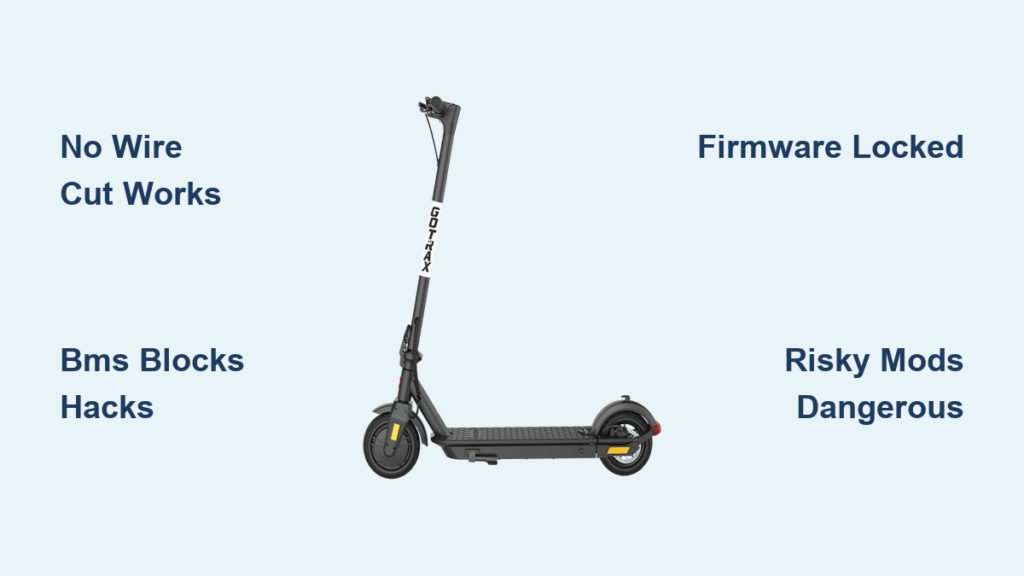
You’ve probably seen online videos claiming to unlock hidden speed on your Gotrax scooter with a simple wire cut or app hack. You’re not alone. Thousands of riders search for “Gotrax scooter speed limiter removal” every month, hoping to squeeze out a few extra miles per hour from their GXL V2, XR Ultra, or Apex. But here’s the hard truth: Gotrax scooters do not have removable speed limiters through software or wire-cutting tricks.
This guide cuts through the misinformation. You’ll learn exactly why speed limiter removal doesn’t work on Gotrax scooters, what actually happens when people try, and the real but risky hardware methods that can increase speed. You’ll also understand the legal and safety consequences and discover safer alternatives if you need more performance.
Why Gotrax Speed Limits Cannot Be Removed Easily
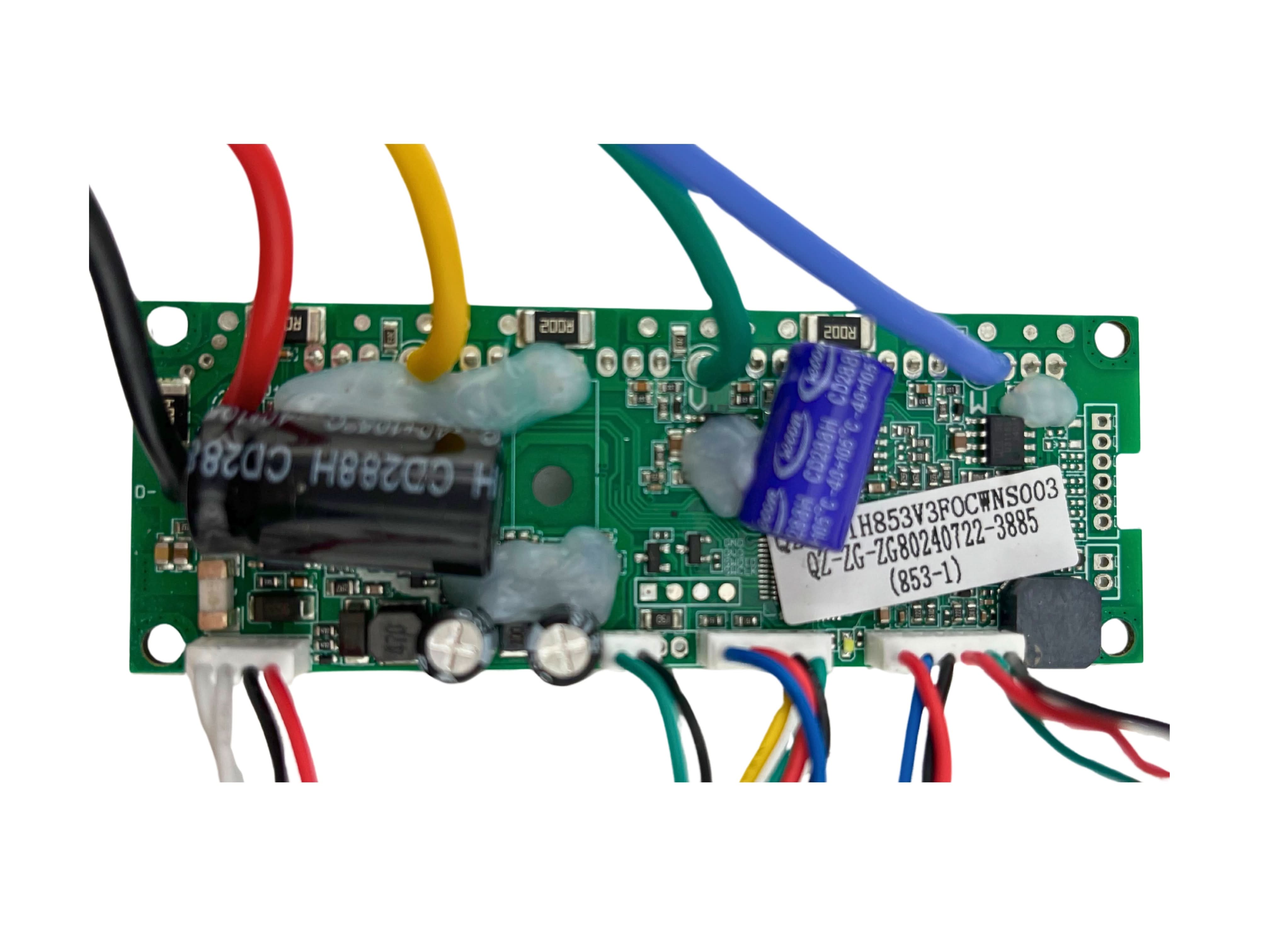
Gotrax scooters are engineered with speed limits baked into their core electrical architecture. Unlike brands like Xiaomi or Ninebot, which use software-based limiting accessible via Bluetooth, Gotrax uses a BMS-centric control system that physically restricts power delivery.
The BMS Enforces Hardcoded Speed Limits
The Battery Management System (BMS) in Gotrax scooters doesn’t just protect the battery. It actively controls how much power the motor can draw. The BMS communicates with the controller using a proprietary protocol and enforces maximum discharge rates that directly cap top speed. Even if you reprogram the controller, the BMS will deny excessive current requests. This dual-layer system makes software-only hacks impossible.
No Bluetooth Tuning or App Unlocking
The Gotrax mobile app for iOS and Android is purely for diagnostics. It shows speed, battery level, and error codes, but it cannot send commands to modify performance. There are no hidden menus, no region unlocks, and no firmware override options. Tools advertised for unlocking scooters are reverse-engineered for Xiaomi models and fail completely on Gotrax hardware.
Firmware Is Locked and Encrypted
Gotrax controllers use microprocessors with read protection enabled. This means you cannot access the firmware via UART, JTAG, or ST-Link interfaces. Attempting to force-flash the chip usually results in a bricked controller, requiring a $60 to $120 replacement. No public firmware dumps or custom firmware exist for Gotrax scooters.
Debunked: Common Speed Hacks That Don’t Work
Despite widespread claims, several popular speed unlock methods are myths when applied to Gotrax scooters. Here’s why they fail and what really happens when you try them.
Cutting the Speed Limiter Wire Causes Damage
Myth: A white wire in the throttle or display harness limits speed. Cut it to go faster.
Reality: Gotrax scooters do not have a speed limiter wire. This myth comes from outdated, low-cost scooters from 2015 to 2017. On Gotrax models, cutting wires typically disables brake sensors, display functions, throttle response, and lighting circuits. The result is a broken scooter, not a faster one.
Firmware Tools Cannot Flash Gotrax Controllers
Myth: Use M365 DownG, Ninebot Flasher, or XiaoDash to unlock speed.
Reality: These tools rely on open Bluetooth communication and known firmware structures. Gotrax uses proprietary, encrypted firmware with no accessible BLE tuning interface. The tools cannot connect, read, or write to Gotrax controllers. The result is a failed connection, no modification possible.
Hidden P-Settings Are for E-Bikes Only
Myth: Press + and – buttons to access hidden speed settings.
Reality: This works only on Gotrax electric bikes like the CTI 3 or F3 V2, not scooters. Gotrax scooters have no P-settings menu. Button combinations only cycle through power modes or lights. The result is no menu appears, wasted time.
USB Reprogramming Bricks the Controller
Myth: Solder wires to the controller and reprogram it directly.
Reality: Gotrax controllers lack exposed programming ports. Even if accessed, the firmware is read-protected. Forced programming often corrupts the bootloader. The result is permanent controller failure, replacement required.
Real But Risky Hardware Modifications

While software hacks fail, physical hardware upgrades can increase speed. These are complex, expensive, and compromise safety. They are not recommended for casual riders.
Replace the BMS for Higher Current Output
Swapping the stock BMS with an aftermarket unit that allows higher discharge rates removes the current cap, letting the motor draw more power.
Steps:
- Open the battery pack
- Desolder the stock BMS
- Install a high-discharge BMS with matching voltage (36V)
- Reconnect all cell leads and balance wires
Risks include:
- Fire or explosion from short circuits
- Thermal runaway due to poor cell balancing
- Loss of overcharge and over-discharge protection
- Rapid battery degradation, 30 to 40% capacity loss in 6 to 12 months
Cost: $150 to $320 or more
Upgrade to a High-Performance Controller
Replacing the stock controller with a high-amp unit delivers more power to the motor.
Steps:
- Remove the deck and disconnect the stock controller
- Match Hall sensor wiring if using a sensored motor
- Connect phase wires correctly (U/V/W)
- Calibrate if using VESC
Risks include:
- Motor overheating or reverse rotation from wiring errors
- Brake failure if brake sensor wires are not connected
- No thermal shutdown or regenerative braking
- Requires precise motor detection settings
Cost: $40 to $500 or more
Add a Second Battery in Parallel
Connecting a second 36V battery in parallel reduces voltage sag under load, allowing slightly higher sustained speed, about 3 to 5 mph gain.
Steps:
- Use fused cables to connect positive and negative terminals
- Ensure both batteries are at the same voltage before connecting
- Charge separately or use a dual-input charger
Risks include:
- Imbalanced discharge leading to cell damage
- Doubled fire risk with two lithium packs
- Added weight affects handling
- Complex charging logistics
Cost: $130 to $210 or more
Install a Higher-Wattage Motor
Replacing the stock 350W hub motor with a 500W or higher unit provides more torque and top speed.
Steps:
- Remove the wheel and disassemble the hub
- Install new motor with correct mounting
- Upgrade controller and BMS to match
- Reinforce brakes for higher speeds
Risks include:
- Overheating due to poor frame cooling
- Frame stress and structural failure
- Requires full electrical system overhaul
- Cost exceeds value of most Gotrax models
Cost: $330 to $670 or more
Use Solid Tires for Minor Speed Gain
Replacing air tires with solid rubber reduces rolling resistance and prevents flats.
Speed Gain: 1 to 2 mph
Trade-offs:
- Harsher ride quality
- Increased weight
- Reduced range
Best for: Riders prioritizing reliability over comfort.
Legal Risks of Modifying Your Gotrax Scooter
Going faster than 20 mph turns your scooter into a motor vehicle under federal law, with serious legal consequences.
Federal Reclassification by CPSC
Under Public Law 107-319, electric scooters are consumer products only if they have motors under 750W, top out at 20 mph or less, and support riders under 170 lbs. Exceed 20 mph and your scooter is no longer a consumer product. It’s an unregistered motor vehicle requiring license plates, liability insurance, and a driver’s license.
State Fines and Impoundment
Most states enforce strict penalties for modified scooters:
- California: $100 to $250 fine, impoundment
- New York: Up to $500 fine, mandatory confiscation
- Texas: $150 to $400 fine, possible impoundment
- Florida: $100 to $300 fine, impoundment
Daily storage fees can reach $200 per day, faster than the scooter ever will.
No Insurance Coverage
Homeowner’s or renter’s insurance excludes modified scooters. If you crash at 25 mph and injure someone, you’re personally liable for all medical bills, property damage claims, and legal defense costs that can exceed $100,000. Judgments are not dischargeable in bankruptcy. Punitive damages may apply if the modification is deemed reckless.
Safety Dangers of High-Speed Modifications
Gotrax scooters are engineered for stability and braking at factory speeds. Going faster overwhelms their safety systems.
Braking Distance Increases Exponentially
Stopping distance is proportional to the square of speed. At 15.5 mph, stopping takes about 12 feet. At 20 mph, it’s about 18 feet, a 50% increase. At 25 mph, stopping takes 28 feet, a 133% increase. At 30 mph, stopping takes 40 feet, a 233% increase. Wet roads or debris can double these distances. Gotrax mechanical disc or drum brakes cannot handle repeated high-speed stops. They overheat, fade, and fail.
Loss of Stability at Speed
Small wheels lack rotational inertia for stability above 20 mph. Lightweight frames are prone to wobbling and speed wobble. Narrow decks limit foot placement during emergency maneuvers. Wind resistance pushes lighter riders off course at 25 mph or faster.
Component Failure Under Stress
Motors operating 30 to 50% over design load see 60 to 70% shorter lifespan. Controllers overheat and shut down or burn out. Batteries cells degrade rapidly under high C-rates. Sudden motor cut-out at high speed causes catastrophic crashes.
Injury Risk Skyrockets
At factory speed (15.5 mph), the injury rate is 30 to 40%. At modified speed (25 mph or higher), the injury rate jumps to 70 to 80%. A 25 mph crash equals a 25-foot fall, with high risk of fractures, head trauma, or death. Eighty-three percent of high-speed scooter accidents result from rider loss of control.
Safer Alternatives to Speed Limiter Removal

Instead of risking fire, fines, or injury, consider these smarter options.
Upgrade to a High-Performance Scooter
Buy a scooter designed for speed and safety:
- Apollo City: 25 to 32 mph, $1,200 to $1,500
- Kaabo Mantis 10: 40 mph, $1,400 to $1,800
- Segway Ninebot Max: 18.6 mph, $800 to $1,000
- Gotrax G4: 20 mph, $600 to $700
These models include proper thermal management, reinforced frames, and advanced braking systems.
Optimize Your Current Scooter
Maximize performance without mods:
- Keep tires inflated to reduce rolling resistance
- Remove accessories to cut weight
- Ride on smooth, flat surfaces to maintain speed
- Avoid hills that strain the motor
For E-Bike Riders: Use P-Settings
If you own a Gotrax electric bike like the CTI 3 or F3 V2, you can adjust speed. Hold the + and – buttons for 2 seconds to access P-settings. Adjust speed limit up to 28 mph with pedal assist. This does not work on any Gotrax scooter model.
Final Verdict: Don’t Remove the Speed Limiter
There is no safe, legal, or reliable way to remove the speed limiter on a Gotrax scooter. The easy hacks do not work and can destroy your scooter. The real hardware mods are expensive, dangerous, and illegal for public road use.
You’re not just risking your warranty. You’re risking your safety, your finances, and your legal standing. A $300 scooter modified to go 25 mph becomes a $1,000 liability in an accident.
If you need more speed, buy a scooter built for it. Models like the Apollo City or Kaabo Mantis are engineered with the frame strength, braking power, and thermal management to handle high speeds safely. They come with proper warranties, insurance options, and compliance certifications.
Save the modifications for machines designed to take them. For your Gotrax scooter, respect the limits. It’s not a flaw in the design. It’s a feature meant to keep you alive.
Frequently Asked Questions About Gotrax Scooter Speed Limiter Removal
Can I remove the speed limiter on my Gotrax GXL V2?
No. The Gotrax GXL V2 has a BMS-centric architecture that enforces speed limits at the hardware level. There is no software hack, wire cut, or app that can unlock speed on this model. The speed limit is hardcoded into the BMS and controller firmware.
Does cutting a wire increase speed on a Gotrax scooter?
No. Gotrax scooters do not have a speed limiter wire. Cutting wires in the throttle or display assembly will not increase speed. It will likely disable brake lights, the LCD screen, throttle response, and lighting circuits, leaving you with a broken scooter.
Do apps like M365 DownG work on Gotrax scooters?
No. M365 DownG, XiaoDash, and similar tools are designed for Xiaomi scooters with accessible Bluetooth interfaces and open firmware. Gotrax uses proprietary, encrypted firmware with no accessible BLE tuning interface. These tools cannot connect to Gotrax controllers.
Are there hidden P-settings on Gotrax scooters?
No. Hidden P-settings menus exist only on Gotrax electric bikes like the CTI 3 or F3 V2. Gotrax scooters have no P-settings. Button combinations only control power modes and lights, not speed parameters.
What happens if I modify my scooter to go over 20 mph?
Modifying your scooter to exceed 20 mph reclassifies it as an unregistered motor vehicle under federal CPSC guidelines. This requires license plates, liability insurance, and a driver’s license. You face fines of $100 to $500 or more, potential impoundment, and personal liability for any accidents. Your insurance will not cover damages.
What is the safest way to get more speed from my Gotrax?
The safest option is to upgrade to a high-performance scooter designed for higher speeds, such as the Apollo City (25 to 32 mph) or Kaabo Mantis 10 (40 mph). Alternatively, optimize your current scooter by maintaining proper tire pressure, reducing weight, and avoiding hills. Solid tires can provide a minor 1 to 2 mph gain with reduced comfort.