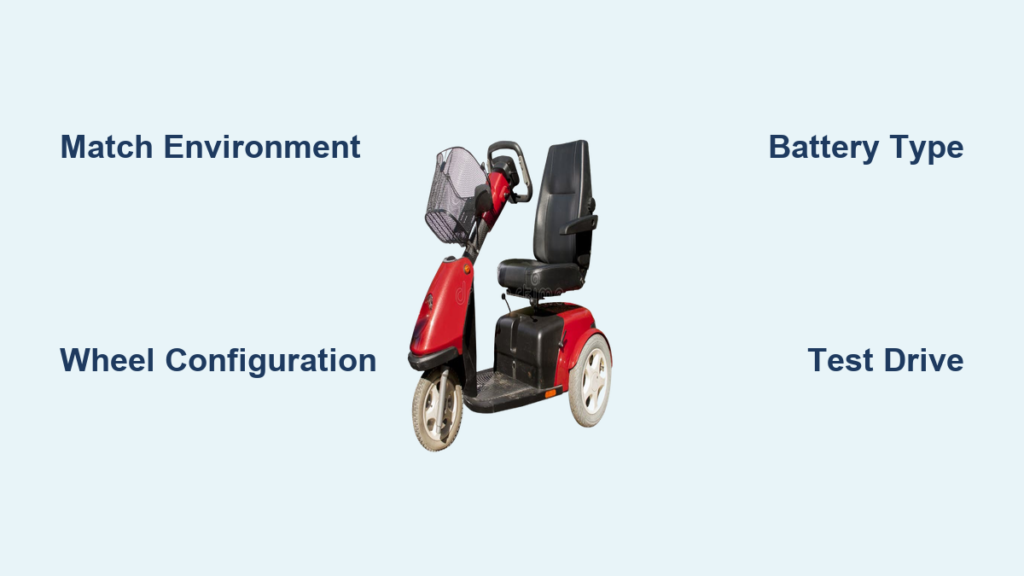
Choosing the right mobility scooter can transform your independence, comfort, and quality of life. Whether you’re navigating narrow hallways at home or exploring sidewalks in your neighborhood, the wrong scooter can lead to frustration, discomfort, or even safety risks. With so many models, features, and technical specs, how to choose a mobility scooter becomes more than a simple purchase—it must be a personalized decision based on your body, lifestyle, and environment.
This guide cuts through the confusion using real-world data and expert insights. You will learn how to match your daily routine with the right wheel configuration, battery range, weight capacity, and safety features while avoiding common pitfalls like buying a flimsy model for rough terrain or overlooking Medicare requirements. By the end, you will know exactly what to test, measure, and ask before making your final decision.
Match Your Scooter to Your Environment

Your primary environment should dictate your scooter design. Choosing based on where you will use it most ensures safety, maneuverability, and long-term satisfaction.
Navigate Tight Indoor Spaces
If you live in an apartment, condo, or home with narrow doorways and hallways, indoor maneuverability is non-negotiable. Look for scooters with a turning radius under 40 inches, ideally 37 inches or less. Three-wheel models typically excel here, but some advanced four-wheel scooters now offer comparable tight turns.
You should prioritize these features for indoor use:
- Non-marking tires to protect hardwood, tile, or laminate floors
- Low-speed settings to avoid scuffing walls or baseboards
- Overall length that fits through your main entryway
- Ability to turn in key areas like the living room or bathroom hallway
Pro Tip: Measure your narrowest doorway and the turning space in your most-used room. Bring these numbers when shopping.
Conquer Outdoor Terrain
For users who walk trails, visit parks, or live in hilly areas, outdoor performance is critical. You should prioritize models with larger wheels for clearing curbs and gravel, suspension systems to absorb shocks, higher ground clearance to avoid scraping, and four-wheel stability for uneven surfaces.
Pneumatic tires provide better traction on grass, sand, or brick paths than solid tires. If you face frequent inclines, check the scooter’s maximum incline rating. Six degrees is standard, but heavy-duty models handle steeper slopes.
Warning: Never exceed the manufacturer incline limit. Doing so risks motor burnout or rollback.
Balance Mixed-Use Needs
Many users need a scooter that transitions smoothly from home to street. For mixed use, choose a four-wheel model with a tight turning radius between 38 and 42 inches. Opt for removable lithium batteries for easy indoor charging. Select dual-mode lighting including headlights, brake lights, and turn signals for road safety. Ensure weather-resistant construction for light rain or damp sidewalks.
Pick the Right Wheel Configuration

The number of wheels determines stability, maneuverability, and portability. Your physical needs and typical terrain should guide this decision.
Choose 3-Wheel for Agility
Three-wheel scooters pivot around a single front wheel, giving them superior turning ability. These models work best for indoor use, flat surfaces, and tight spaces with turning radii as low as 29.9 inches on some models.
Three-wheel scooters are ideal for:
- Apartment dwellers
- Users who shop in crowded stores
- Those prioritizing compact storage
However, they are less stable on uneven ground and may feel tippy during sharp turns at speed. Avoid them if you frequently use gravel paths or live in a hilly area.
Expert Note: If balance is a concern, skip three-wheel models even if they fit your space.
Opt for 4-Wheel for Stability
Four-wheel scooters offer a wider wheelbase and lower center of gravity, reducing tipping risk. These models work best for outdoor use, rough terrain, and users with balance issues. They often have weight capacities exceeding 300 pounds and provide more generous legroom than three-wheel models.
Four-wheel scooters handle these challenges well:
- Curb cuts
- Cracked sidewalks
- Grass and gravel
- Passenger weight when carrying groceries
While traditionally harder to turn indoors, modern four-wheel scooters now rival three-wheel agility thanks to advanced steering geometry. If you plan to use your scooter outdoors more than 50 percent of the time, go with four-wheel.
Consider Heavy-Duty Models for Rugged Use
Heavy-duty scooters are built like off-road vehicles. They feature motors up to 700 watts, full shock absorption, captains chairs with lumbar support, anti-tip wheels, and high ground clearance. Extended battery ranges often exceed 20 miles.
These models suit users over 300 pounds, all-terrain needs, or significant mobility challenges. They are heavier and harder to transport, but essential for safety and comfort if your needs exceed standard models.
Key Metric: Always choose a scooter with a weight capacity 50 pounds above your body weight for motor longevity and battery efficiency.
Select Travel Models for Portability
Travel scooters fold or disassemble into four to five pieces. The heaviest piece should be within your lifting ability, as many users struggle with 60-pound batteries. Weights can be as low as 35 pounds per piece.
Look for these features when choosing a travel model:
- Airline-compliant batteries under 160 Wh
- Five-minute assembly time
- Compact folded size that fits in car trunks or cruise ship cabins
Trade-offs include smaller wheels, which create a rougher ride, and reduced outdoor stability. Travel models work best for short-term use or as a secondary scooter.
Evaluate Battery and Range Needs

Your daily travel distance and terrain directly impact battery requirements. Choosing the wrong battery can leave you stranded.
Compare Lead-Acid vs. Lithium Batteries
The two main battery types have distinct differences:
Lead-Acid Batteries:
- Lower upfront cost between $200 and $300
- Heavy weight at 70-plus pounds total
- Lifespan of 12 to 18 months
- Charge time of 8 to 12 hours
- Susceptible to memory effect
Lithium-Ion Batteries:
- Higher upfront cost between $400 and $800
- Light weight between 30 and 50 pounds
- Lifespan of 3 to 5 years
- Charge time of 4 to 6 hours
- No memory effect
Lithium-ion is best for frequent users, travelers, or those who want removable batteries. Lead-acid suits occasional users on a budget.
Pro Tip: If you cannot charge near your scooter’s storage spot, choose a removable battery.
Calculate Your Required Range
Do not rely on manufacturer claims. Real-world range is often 20 to 30 percent less due to user weight, terrain, weather, and stopping and starting in traffic.
Consider these factors when calculating range:
- Heavier users experience shorter range
- Hills and gravel reduce range significantly
- Cold weather slows battery output
- Frequent stops in traffic consume more power
If your longest daily trip is 5 miles, choose a scooter rated for at least 10 to 12 miles to avoid anxiety.
Rule of Thumb: Double your typical daily distance when selecting range.
Prioritize Comfort and Ergonomics
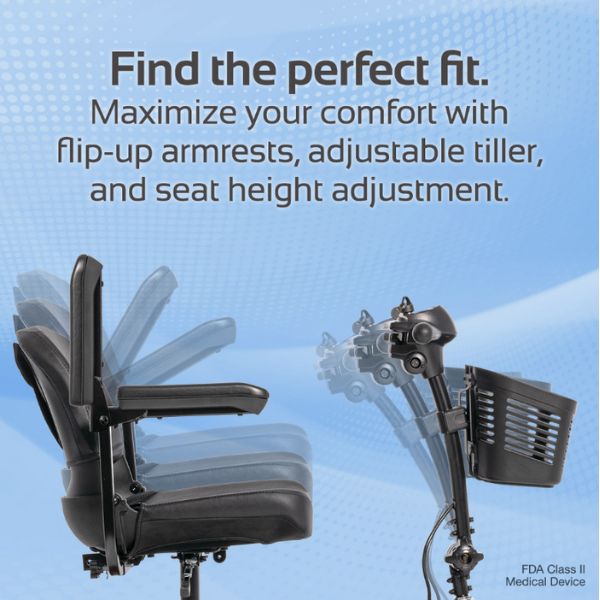
A scooter may check all technical boxes, but if it is uncomfortable, you will not use it. Focus on seating, controls, and transfer ease.
Test Seat Adjustability
Look for swivel seats that rotate 360 degrees for easier transfers. Adjustable height, depth, and backrest angle accommodate your body shape. Flip-up armrests help with side transfers. Lumbar support and headrests come standard on Class 3 models.
Taller users need 44 inches or more of legroom. Test the seat for at least 15 minutes. Pressure points or back pain will become obvious quickly.
Warning: Never buy online without trying a similar model first.
Choose the Right Tiller
The tiller controls steering and speed. Standard tillers offer traditional handlebar style. Delta tillers provide triangular grip, which is better for arthritis or weak hands.
Ensure the tiller is adjustable in height and angle so your wrists stay neutral. The control panel should display battery level, speed setting, and lights and horn status.
Aid Transfers with Smart Design
If you need help getting on and off, choose a higher seat height between 19 and 21 inches. Look for removable seats or open-frame designs. Confirm caregiver handles are sturdy. Some models allow the tiller to swing aside for easier front transfers.
Ensure Safety and Visibility

Safety is not optional, especially if you use roads or travel at night.
Check Stability Features
Essential safety components include anti-tip wheels to prevent backward roll on inclines, wide wheelbase to resist side tipping, automatic speed reduction when turning, and electromagnetic brakes that engage when throttle is released.
Four-wheel and heavy-duty models include most of these features as standard.
Boost Visibility in Low Light
For dusk, dawn, or overcast days, ensure your scooter has front headlights for path visibility, rear brake lights and taillights, and turn signals required for Class 3 road use. Reflectors on sides and rear provide passive visibility.
Consider adding these accessories:
- Safety flag with high-visibility pole
- Rearview mirror
- Horn for audible alerts to pedestrians
Class 3 Note: If you plan to use roads, registration, lights, and indicators are mandatory in most regions.
Plan for Transport and Storage
How you will move and store your scooter affects your daily life.
Transport in a Vehicle
For car owners, folding or disassembly weight must match your lifting ability. Trunk-mounted carriers work for lighter models. Vehicle lifts are needed for heavy-duty scooters. Measure your trunk space and test-fit a demo model if possible.
Fly with Airline Compliance
For travelers, lithium batteries must be FAA-approved at 160 Wh or less. Confirm with your airline in advance because policies vary. The scooter must fold or break down to fit cargo.
Store at Home Safely
Before buying, measure your doorway, hallway, and storage area. Ensure access to a nearby power outlet for charging. If storing outdoors, invest in a weatherproof cover or shed. Consider a ramp if moving from garage to home.
Hidden Cost: Outdoor storage may require a lock, cover, and extension cord.
Understand Costs and Buying Options
Mobility scooters range from $800 to $7,000. Know what you are paying for and what you will pay later.
Know the Price Ranges
- Travel or portable models cost $800 to $1,500
- Three-wheel models cost $1,000 to $2,000
- Four-wheel models cost $1,500 to $3,000
- Heavy-duty models cost $2,500 to $6,900 or more
- Premium models like WHILL cost $2,400 to $4,000
Higher prices mean better batteries, suspension, and durability, not just brand name.
Rent vs. Buy: Make the Right Call
Rent a scooter if you are recovering from surgery, going on vacation, or testing a model before buying. Daily rental rates range from $25 to $60. Renting for more than two to three months usually costs more than buying.
Buy a scooter if you are using it daily for six or more months, needing customization, or wanting long-term independence.
Use Medicare and Insurance Wisely
Medicare Part B covers scooters as Durable Medical Equipment if you have a doctor is prescription and cannot perform daily activities inside your home without it. You will pay 20 percent coinsurance. Medicare pays for basic models only. Upgrades like extra battery or luxury seat are out-of-pocket expenses.
Private insurance coverage varies. Check coverage, deductibles, and approved models before purchasing.
Avoid Common Mistakes
Even well-researched buyers make errors. Steer clear of these common pitfalls:
Do Not Sacrifice Stability for Portability
A lightweight scooter that tips on gravel is not safe. Match stability to your primary terrain.
Do Not Skip the Test Drive
Comfort is not obvious in photos. Test drive multiple models in real conditions, both indoors and outdoors.
Do Not Ignore Turning Radius
A scooter that will not turn in your living room is useless. Measure first, buy second.
Do Not Forget Hidden Costs
Budget for battery replacements costing $200 to $800, annual servicing costing $100 to $200, accessories like basket, cover, and mirror, and insurance for theft and liability.
Final Decision Checklist

Before purchasing, confirm you have verified each of these elements:
- Environment match: indoor, outdoor, or mixed
- Space verified: doorways and turning radius measured
- Weight and range: capacity exceeds your weight, range doubles your longest trip
- Tested comfort: seat, tiller, and transfer ease evaluated
- Battery type: lithium for longevity, lead-acid for budget
- Support confirmed: warranty, service, return policy reviewed
- Insurance or Medicare: coverage verified with provider
Consult a physical or occupational therapist if you are unsure. They can assess your mobility needs and help document medical necessity for insurance.
Frequently Asked Questions About Choosing a Mobility Scooter
What is the difference between a 3-wheel and 4-wheel mobility scooter?
Three-wheel scooters offer tighter turning radii, making them ideal for indoor use and tight spaces. Four-wheel scooters provide maximum stability, which suits outdoor use, rough terrain, and users with balance concerns. Your primary environment should determine which configuration you choose.
Does Medicare cover mobility scooters?
Medicare Part B may cover mobility scooters as Durable Medical Equipment if you have a doctor is prescription and can prove you cannot perform daily activities inside your home without it. You will pay 20 percent coinsurance, and Medicare covers only basic models. Upgrades are out-of-pocket.
How far can a mobility scooter travel on one charge?
Standard mobility scooters offer 10 to 15 miles per charge. Heavy-duty models can reach 20 to 25 miles or more. Real-world range is typically 20 to 30 percent less than manufacturer claims due to user weight, terrain, weather, and driving habits.
What features should I look for in a mobility scooter for outdoor use?
For outdoor use, prioritize larger wheels between 8 and 10 inches, suspension systems, higher ground clearance of 3 inches or more, four-wheel stability, and pneumatic tires for better traction. Check the maximum incline rating if you live in a hilly area.
Can I take my mobility scooter on an airplane?
Yes, but you need airline-compliant lithium batteries typically under 160 Wh. Confirm with your specific airline before travel. The scooter must fold or disassemble to fit in cargo. Not all scooters meet these requirements, so verify before booking.
How do I determine the right weight capacity for my mobility scooter?
Choose a scooter with a weight capacity at least 50 pounds above your body weight. This ensures motor longevity, battery efficiency, and safe operation. If you plan to carry groceries or other items, factor that weight into your calculation.
Key Takeaways for Choosing Your Mobility Scooter
Choosing the right mobility scooter comes down to matching the device to your actual life situation. Start by honestly assessing where you will use the scooter most, whether that is indoors in a small apartment, outdoors on varied terrain, or a combination of both. Measure your doorways and turning spaces before shopping to avoid the frustration of a scooter that will not fit in your home.
Prioritize comfort through test drives. A scooter that is technically adequate but uncomfortable will sit unused. Pay attention to seat adjustability, tiller position, and transfer ease. Consider your long-term needs: battery replacement costs, annual servicing, and potential changes in mobility.
Finally, explore all payment options. Medicare or private insurance may cover basic models if you meet medical necessity requirements. Renting makes sense for short-term needs, while buying is more economical for daily use. With the right research and realistic expectations, you will find a scooter that keeps you moving safely, confidently, and independently for years to come.