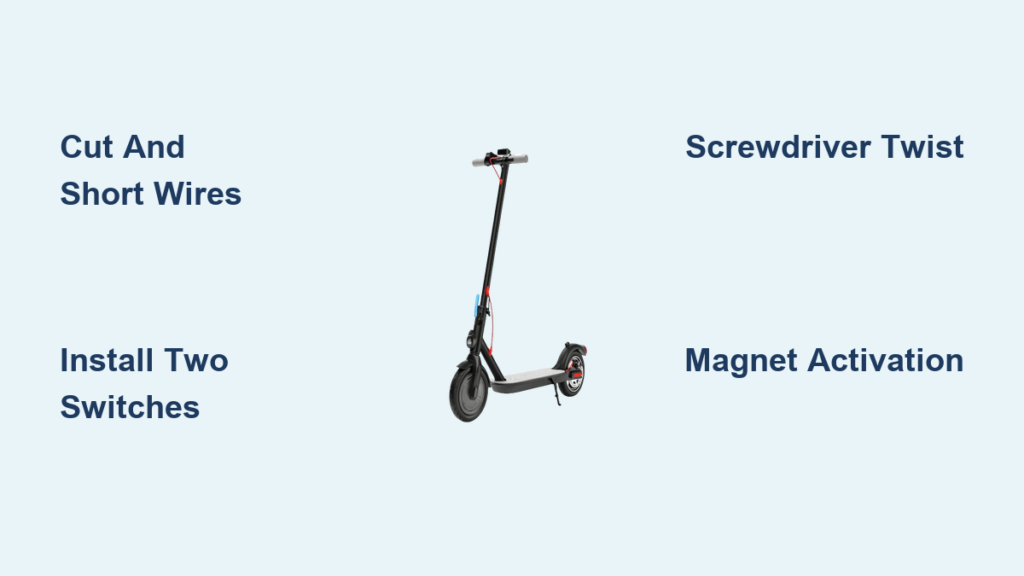
Losing your scooter key or facing a broken ignition can leave you stranded. For owners of 50cc gas scooters or electric models, knowing how to hotwire a scooter may seem like a quick fix. This guide focuses on safe, owner-authorized bypass techniques for gas and electric scooters, based on real wiring diagrams and mechanical insights. You will learn how to start your scooter without a key using proven methods while understanding the risks, limitations, and better long-term fixes.
Whether you are dealing with a vandalized ignition or a forgotten spare key, these procedures are designed for temporary use only. We will cover wire bypasses, switch replacements, mechanical tricks, and electric scooter workarounds while preserving your safety and avoiding permanent damage when possible.
Identify Your Scooter Type First
Before attempting any bypass, determine whether you have a gas-powered 50cc scooter or an electric model. The starting mechanism differs significantly.
Gas vs. Electric: Key Differences
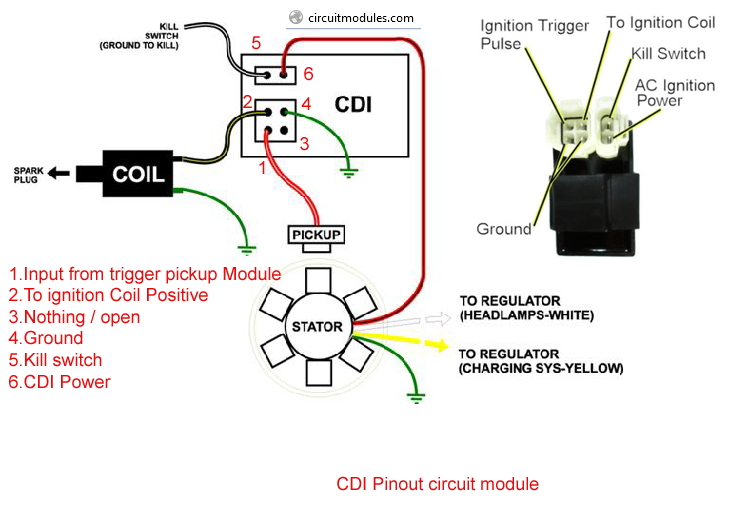
Gas scooters rely on spark ignition through the CDI system, fuel, compression, and air. Bypassing involves managing ground and power wires to enable spark and system power. Electric scooters use controllers and magnetic or electronic locks. Starting often requires tricking the controller into on mode via magnets, switches, or direct wiring. Using the wrong method can fry electronics or create fire hazards. Always verify your scooter type before proceeding.
Gas Scooter Ignition Wiring Basics

Most 50cc scooters, especially GY6-based models, use a standard four-wire ignition switch. Knowing what each wire does is critical before attempting any bypass.
Standard Wire Functions
| Color | Function |
|---|---|
| Red | Battery positive (12V input) |
| Green | Ground (chassis earth) |
| Black | Powers lights, signals, accessories |
| Black/White | CDI signal line (controls spark) |
The ignition switch acts as a traffic director. In the Off position, it grounds the CDI via Green to Black/White to kill spark. In the On position, it cuts that ground and connects Red to Black to power the system.
Check for Decoy Wires
Some scooters have extra wires that go to unused terminals. Use a multimeter to test continuity. Turn key to On and Off. If Green and Black/White connect only in Off, that is your CDI ground. If Red and Black connect only in On, that is your power circuit. This step prevents unnecessary cuts and identifies simplified bypass opportunities.
Method 1: Cut and Short Wires (Emergency Only)
This is a destructive, last-resort method for gas scooters when you need to move the scooter immediately.
When to Use This
Use this method only when the ignition switch is destroyed, no spare key is available, and short-distance movement is needed such as moving from street to garage.
Steps to Hotwire
-
Expose the Ignition Harness
Remove plastic covers behind the handlebars. Locate the ignition switch connector, which usually has four to five wires. -
Cut the Critical Wires
Cut two Green wires, two Black wires, and one Red wire. Some models have only one of each, so verify first. -
Short the Wires
Twist both Green wires together. Twist both Black wires together. Connect Red to the joined Black wires. -
Start the Engine
Set the kill switch to Run. Kickstart the engine.
Result: Power is always on, CDI is ungrounded, and the scooter starts.
What You Lose
The horn becomes dead, turn signals become non-functional, and dashboard indicators turn off. The engine only stops via the kill switch or fuel cutoff. Riding without signals or a horn is dangerous, so this method is not for regular use.
Method 2: Install Two Manual Switches (Semi-Permanent Fix)
A smarter, non-destructive alternative that restores control and safety functions.
Why This Is Better
This method requires no wire cutting. It retains the horn, lights, and turn signals. It is reversible with minimal effort.
Required Parts
Two 12V SPST switches (on/off toggle), wire connectors or terminal blocks, heat shrink tubing, and optional weatherproof switch housing.
Wiring Setup
Switch 1: Power On/Off (Red to Black)
Connect the Red wire (battery positive) to one terminal. Connect the Black wire (system power) to the other. Closing this switch powers lights, signals, and accessories.
Switch 2: CDI Enable (Green to Black/White)
Connect the Green wire (ground) to one terminal. Connect the Black/White wire (CDI) to the other. Leave this switch open to start, which breaks the CDI ground. Close it to stop, which grounds the CDI and kills the spark.
How to Start
Open the CDI switch to disable ground. Close the Power switch to turn on the system. Set the kill switch to Run. Kickstart the engine.
How to Stop
Flip the CDI switch closed to ground the CDI, or use the handlebar kill switch.
Method 3: Screwdriver Ignition Twist (Quick Mechanical Bypass)
If the ignition cylinder is intact but the key is missing, try this mechanical trick.
Tools Needed
A small flat-head screwdriver that fits snugly in the key slot.
Steps
Insert the screwdriver into the ignition slot. Apply firm, steady pressure and rotate clockwise to the On position, which is usually one click past vertical.
Limitations
If the steering lock is engaged, you may not be able to turn the fork. If the fuel cap is locked, you cannot refuel without the key. Forcing the switch can strip internal wafers, making future key use impossible.
Method 4: The Paper Clip Bypass (Simplified Wiring)
In some scooters, only two wires matter: Red and Black.
How to Confirm
Use a multimeter to test Red and Black in On and Off positions. If they show continuity only in On, and other wires do nothing, your ignition is simple.
Bypass Procedure
Disconnect the ignition connector. Insert a paper clip or jumper wire between Red and Black terminals. Ensure Green and Black/White are not connected, because the CDI must be ungrounded.
Electric Scooter Bypass Techniques
Electric scooters do not have spark plugs, but they still have ignition locks and controllers.
Method A: Magnet Activation (Reed Switch Trick)
Some e-scooters use magnetic reed switches instead of keys.
Grab a strong neodymium magnet. Slide it around the ignition area near the dashboard or key slot. Watch for lights or power-on sounds. If successful, mark the spot for future use.
Method B: Controller Wire Jump (High Risk)
Directly activating the controller can start the motor but risks damage. Locate the two thin wires leading from the ignition switch to the controller, usually black/red or white/red pairs. Disconnect the ignition connector and touch the two ignition wires together. If successful, the system powers on.
Method C: Kill Switch Override
Some e-scooters allow boot-up if the kill switch is manipulated. Locate the kill switch near the throttle. Use a screwdriver to hold it in the Run position. Plug in the scooter or press power, because some models boot when the kill switch is engaged.
Critical Safety Checks Before Riding
Even if you get the scooter running, it may not be safe to ride.
Test for Mechanical Failures
Check for steering wobble, which indicates loose fork nuts or destroyed bearings. Test both front and rear brakes. Inspect tires and chain for wear, especially if the scooter was abandoned. Fix these issues first before riding. Tighten fork nuts to specification and use thread locker. Replace bearings if needed.
Risks of Hotwiring a Scooter
Know what you are risking before cutting a wire.
Electrical Damage
Shorting Red to Green sends 12V to ground, which can blow a fuse, fry the CDI, or melt wires. Incorrect controller jumps on e-scooters can kill the BMS.
Fire Hazard
Exposed wires rubbing against the frame can spark. Always insulate joints with heat shrink tubing, not tape.
Legal and Warranty Issues
Hotwiring someone else’s scooter is theft. This guide is for your own vehicle only. Tampering voids warranties and may invalidate insurance.
Long-Term Fixes: Do This After Bypassing
Emergency methods get you moving, but they are not sustainable.
Replace the Ignition Switch
A replacement costs $20 to $50 online and takes about 30 minutes with basic tools. This restores all functions, the steering lock, and safety. Match your model number and buy OEM if possible.
Install a Keyless Start System
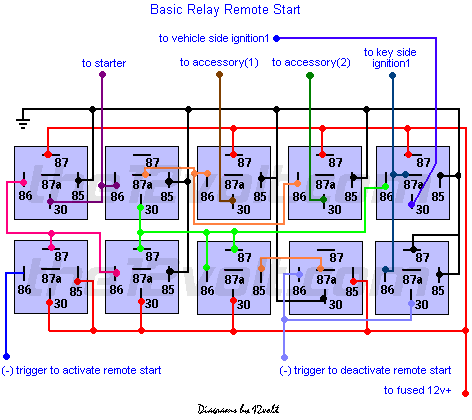
Modern upgrade options include push-button or fob-based starts. Benefits include no keys to lose, cleaner wiring than DIY switches, and often includes anti-theft features. Kits include relay harnesses that safely manage CDI and power circuits.
Get a Spare Key Made
Locksmiths can decode your ignition and cut a new key. Keep one at home and one in your wallet. Never rely on hotwiring as your primary access method.
Key Takeaways for Fixing Your Scooter
Knowing how to hotwire a scooter can save you from a breakdown, but it should never be your go-to solution. The wire-cutting method works in emergencies but sacrifices safety features like horns and turn signals. The two-switch bypass is smarter for long-term use if you must operate without a key. For electric models, magnet tricks or controller jumps are hit-or-miss and risky. Use these techniques to get your scooter home, then replace the ignition or install a keyless system. Combine that with mechanical checks, especially steering and brakes, and you will have a reliable, legal, and safe ride.
Frequently Asked Questions About Hotwiring a Scooter
Is hotwiring a scooter legal?
Hotwiring your own scooter for emergency recovery is not illegal, but hotwiring someone else’s scooter constitutes theft. Always ensure you own the vehicle before attempting any bypass method.
Can hotwiring damage my scooter?
Yes, incorrect wiring can fry the CDI, damage the controller, or cause electrical shorts. Always verify wire functions with a multimeter before making connections.
What is the safest bypass method for gas scooters?
The two-switch bypass method is the safest. It retains all safety features, is reversible, and does not require cutting wires permanently.
Why do I lose my horn and turn signals when I hotwire?
The wire-cutting method disconnects the accessory circuits that power these systems. The two-switch bypass preserves these functions when wired correctly.
Can I use a screwdriver to start any scooter?
Only if the ignition cylinder is intact and the steering lock is not engaged. This method can damage the internal wafers, making future key use impossible.
What should I do immediately after hotwiring my scooter?
Replace the ignition switch or install a keyless start system. Check steering, brakes, and tires for safety before regular riding.