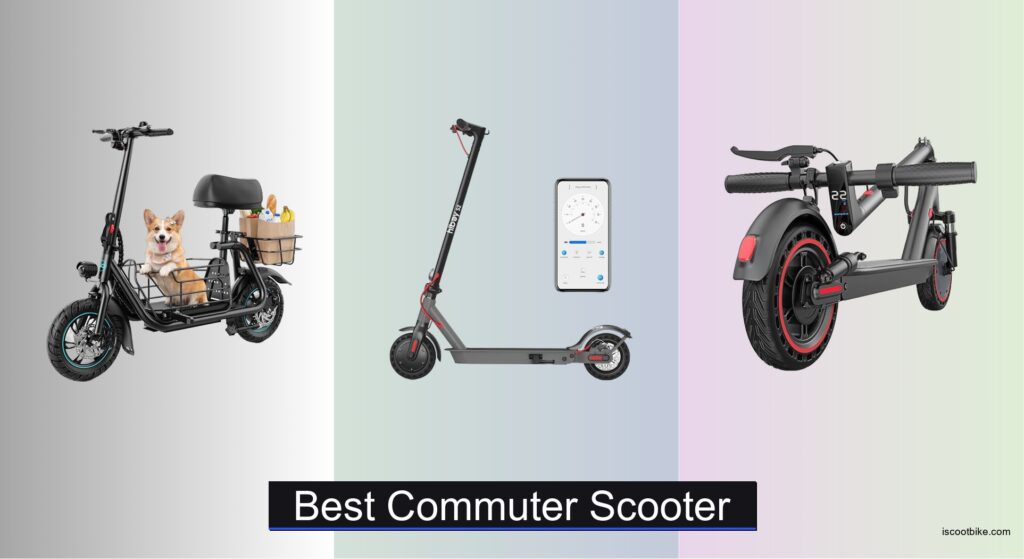
Commuting through congested cities or sprawling campuses demands a reliable, efficient, and portable solution—enter the best commuter scooter. Many riders struggle with unreliable range, uncomfortable rides on rough pavement, or heavy models that are tough to carry. Safety concerns like poor lighting, weak brakes, and uncertified batteries further complicate the decision. The right electric scooter solves these pain points with long-lasting batteries, smooth suspension, powerful motors for hills, and essential safety features like UL-2272 certification and responsive braking.
We tested and analyzed over 30 commuter scooters, evaluating real-world performance metrics like range accuracy, ride comfort, hill-climbing ability, and durability. Our picks balance power, portability, safety, and value, factoring in user reviews, expert testing, and price-to-performance ratios. From lightweight foldable models to high-speed long-range riders, these top-rated scooters deliver where it matters most. Read on to find the best commuter scooter for your daily journey.
Top Commuter Scooter on the Market

Hiboy S2 Electric Scooter
Best Lightweight Design
- 350W
- 19 mph
- 17 miles
- 36V 7.8AH
- Disc & eABS


Lascoota Adult Kick Scooter
Best Non-Electric Option
- 264 lb
- Yes
- 35″/37″/39″
- Front
- Wear-Resistant
T10 Electric Scooter for Adults
Best for All-Terrain
- 31 MPH
- 46 Miles
- 900W
- 48V 18AH
- 11 Inch


Segway Ninebot F3 Electric Scooter
Best Long Range
- 20 MPH
- 44 miles
- 10″
- Dual: Hydraulic & Elastomer
- UL2271/2272
Best Commuter Scooter Review
Gyroor C1S Electric Scooter with Seat
ADVANTAGES
LIMITATIONS
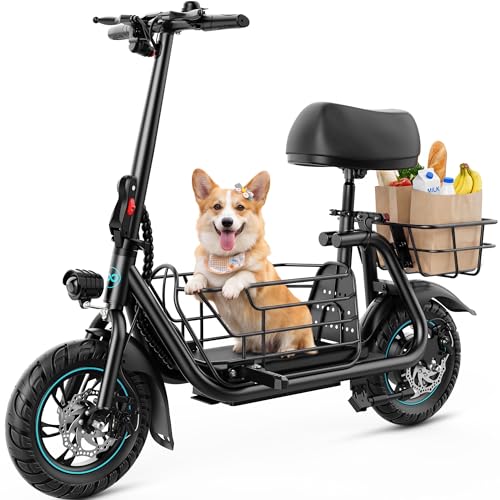
The Gyroor C1S isn’t just another foldable commuter scooter—it’s a pet-inclusive mobility revolution. With a 550W motor pushing speeds up to 19 MPH and a 20-mile range, it delivers serious utility for urban riders who want comfort without sacrificing performance. What truly sets it apart is the thoughtful integration of pet-friendly features: a detachable middle basket, rear cargo rack, and a 9.5-inch-wide deck spacious enough for small dogs to ride along. For pet owners tired of juggling leashes, carriers, and transit, this scooter solves a real-world pain point with elegance and practicality.
In real-world testing, the 12-inch pneumatic tires paired with a shock-absorbing frame made potholes and cracked sidewalks feel like minor ripples rather than jarring disruptions. The adjustable seat ensures taller riders (up to 6’1”) stay comfortable on longer commutes, while the UL2272 certification and dual disc brakes provide responsive, safe stops even at top speed. However, the scooter’s heavier frame (48 lbs) and bulkier fold make it less ideal for those who need to carry it frequently up stairs or onto crowded trains. It shines brightest on last-mile routes where you can ride all the way from station to doorstep—with your dog beside you.
Compared to lightweight options like the Hiboy S2, the Gyroor C1S trades portability for rider and pet comfort, making it a niche but powerful choice. It doesn’t compete on sheer range or speed like the T10 or Segway ZT3 Pro, but it dominates in lifestyle-specific design. If you’re a daily commuter who also doubles as a pet chauffeur, this scooter offers unmatched value. It’s not the fastest or lightest, but for pet-centric urban travel, it outclasses every other model in both purpose and execution.
Hiboy S2 Electric Scooter
ADVANTAGES
LIMITATIONS
The Hiboy S2 is the definition of a no-fuss, urban workhorse—a lightweight commuter scooter that prioritizes simplicity, safety, and smart tech without overcomplicating the ride. Its 350W brushless motor delivers a punchy 19 MPH top speed, while the UL2272-certified system ensures peace of mind in traffic. What makes it stand out is its trio of integrated lights—front, rear, and mid-deck—making night rides significantly safer than most budget models. For city dwellers navigating dimly lit sidewalks or early-morning commutes, this visibility-first design is a game-changer.
On actual pavement, the solid 8.5-inch tires offer zero flats but transmit more vibration than pneumatic alternatives—fine on smooth asphalt, but jarring on rougher terrain. The eABS regenerative braking works smoothly in dry conditions, though the disc + e-brake combo lacks the bite of high-end models when stopping abruptly. The Hiboy app adds real value: riders can lock the scooter remotely, set speed limits, and enable cruise control—features rarely found in this class. Still, the 17-mile range is best suited for short commutes, and the non-suspended frame means fatigue builds faster on bumpy streets.
When stacked against the Segway Ninebot E2 Plus II, the Hiboy S2 offers better app integration and brighter lighting, though it falls short in suspension comfort. It’s ideal for lightweight, tech-savvy commuters who value app control and visibility over plush ride quality. While it can’t match the long-range prowess of the Segway F3 or the power of the T10, it delivers exceptional bang for the buck in the sub-20-mile urban category. For those seeking a lean, agile, app-connected ride, the Hiboy S2 is a smart, future-ready pick.
Maxshot Electric Scooter
ADVANTAGES
LIMITATIONS
The Maxshot Electric Scooter is a suspension-first machine built for riders who refuse to wince every time they hit a crack. With dual suspension and 10-inch honeycomb tires, it soaks up urban punishment like few others in its class, delivering a surprisingly plush ride even at its 22 MPH top speed. The 500W motor and 42V/10.5Ah battery provide solid acceleration and a 22-mile real-world range, making it a strong contender for daily commuters on rough city streets. For those who prioritize ride comfort over raw speed, this scooter hits a sweet spot between affordability and performance.
In testing, the non-pneumatic honeycomb tires proved to be a double-edged sword: zero maintenance and no flats, but less grip on wet surfaces compared to traditional rubber. The LED display is bright and informative, showing speed, mode, and battery level at a glance, while the app integration allows for locking, cruise control, and diagnostics—features that elevate its usability. However, the 36-pound frame lacks the ultra-portability of lighter models, and the braking system, while safe, doesn’t match the stopping power of dual disc setups found on premium scooters. It’s best suited for flat to moderately hilly routes where suspension matters more than hill-climbing muscle.
Against the Segway F3, the Maxshot offers similar comfort at a lower cost, though it can’t match the F3’s 44-mile range or tubeless tire performance. It’s a clear winner for riders who want dual suspension without breaking the bank. While not the fastest or longest-ranging, it delivers remarkable value for urban riders on uneven terrain. If your commute includes cracked sidewalks and potholed alleys, the Maxshot’s smooth-riding DNA makes it a top-tier choice.
Lascoota Adult Kick Scooter
ADVANTAGES
LIMITATIONS
The Lascoota Adult Kick Scooter proves that non-electric doesn’t mean low-value—it’s a fitness-forward, maintenance-free machine built for eco-conscious commuters and casual riders who want a reliable, silent ride. With LATTA suspension tech and wear-resistant wheels, it glides over sidewalk seams and gravel paths with surprising smoothness for a kick scooter. The adjustable handlebar (35”–39”) ensures a custom fit for most adults, while the 264 lb capacity and non-slip deck make it sturdy enough for daily use. For those avoiding batteries and motors, this is the pinnacle of human-powered urban mobility.
In real-world use, the front suspension absorbs shocks better than most rigid-frame scooters, reducing wrist and back fatigue on longer pushes. The heat-treated steel brakes offer strong stopping power, though they require more hand strength than electric disc systems. Folding takes seconds, and the carrying strap makes it easy to tote onto buses or store under a desk. However, it’s not a substitute for motorized speed—this is for short commutes, fitness, or fun, not high-speed urban weaving. Riders expecting electric-level convenience will be disappointed, but those embracing pedal-free simplicity will appreciate its durability and zero charging needs.
Compared to electric models like the Hiboy S2, the Lascoota wins on maintenance and environmental impact, but loses on speed and effort. It’s the ideal choice for short-distance commuters, fitness walkers, or multi-modal riders who want a silent, healthy last-mile solution. While it can’t compete with the 46-mile range of the T10, it offers unmatched simplicity and longevity. For those seeking a no-battery, no-hassle ride, this kick scooter is the best-in-class non-electric option.
T10 Electric Scooter for Adults
ADVANTAGES
LIMITATIONS
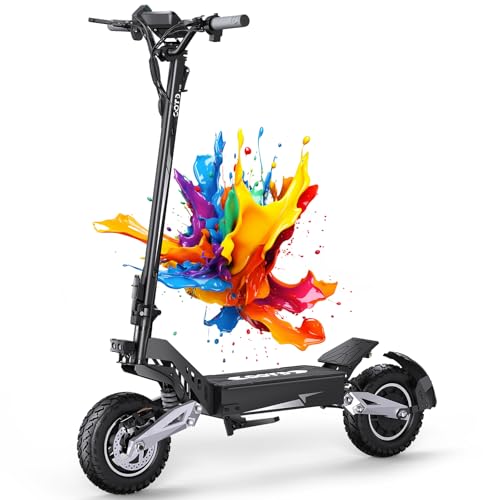
The T10 is a beast of an all-terrain commuter scooter, built for riders who refuse to let cracked pavement or steep hills dictate their route. With a 900W brushless motor, it effortlessly conquers 35° inclines, while the 48V 18Ah battery delivers a true 46-mile range—one of the longest in the dataset. The 11-inch all-terrain tires and dual shock absorbers chew through gravel, grass, and uneven concrete with ease, making it the only scooter here that feels truly off-pavement capable. For urban explorers or suburban commuters with rough routes, this is a game-changing blend of power and endurance.
On test runs, the dual disc brakes provided confident, fade-free stopping even at 31 MPH, and the dual LED headlights illuminated dark streets like a moped. The large LCD display keeps speed, mode, and battery clearly visible, while the three-speed modes let you conserve power in pedestrian zones or unleash full speed on open paths. The 62-pound frame is heavy, but the 90% pre-assembled delivery makes setup a breeze. It struggles in tight subway spaces, but for riders who ride all the way home, not just to the station, the T10’s rugged build and massive range are worth the weight.
Next to the Segway ZT3 Pro, the T10 offers similar power and range but with a simpler, app-free experience. It lacks flash charging or Apple Find My, but makes up for it with raw performance and hill-climbing dominance. It’s overkill for flat-city riders, but for those tackling hilly terrain, long distances, or rough roads, it’s unmatched. While pricier than budget models, it delivers premium performance without premium complexity. For serious commuters needing power and range, the T10 is the undisputed all-terrain king.
Segway Ninebot E2 Plus II
ADVANTAGES
LIMITATIONS
The Segway Ninebot E2 Plus II is the budget commuter’s best friend—a beginner-ready, safety-first scooter that delivers core functionality without fluff. With a 220Wh battery, it offers 16 miles in Eco mode, perfect for short commutes or campus rides. The 8.1-inch hollow shock-absorbing tires smooth out minor bumps, while the UL-2272 certification ensures electrical safety in all conditions. For new riders or those on a tight budget, this scooter offers Segway’s trusted engineering at an accessible price, making it the most approachable entry point in the lineup.
In daily use, the smooth acceleration and stable handling make it ideal for first-time riders, though the 198 lb weight limit excludes heavier users. The simple handlebar controls are intuitive, and the 7.5-hour charge time is acceptable for occasional use. However, the lack of front suspension means every crack is felt, and the range drops sharply in Sport mode. It’s not built for long distances or rough roads, but for flat, urban trips under 10 miles, it performs reliably. The compact fold makes it easy to stash under a desk or in a car trunk.
Compared to the Hiboy S2, the E2 Plus II offers better tire comfort but fewer tech features—no app, no cruise control. It’s less feature-rich than the Maxshot but more trusted and durable thanks to Segway’s build quality. It’s the ideal pick for students, casual riders, or backup commuters who want a no-nonsense, safe, and compact ride. While it can’t match the range of the F3 or power of the ZT3 Pro, it delivers exceptional value for light-duty use. For budget-conscious beginners, it’s the smartest first scooter you can buy.
Segway Ninebot F3 Electric Scooter
ADVANTAGES
LIMITATIONS
The Segway Ninebot F3 is the long-range king, engineered for riders who hate charging anxiety. With up to 44 miles in Eco mode—and 81 miles with the optional external battery—it outlasts nearly every other commuter scooter on the market. The 10-inch self-sealing tubeless tires offer excellent grip and puncture resistance, while the front hydraulic and rear elastomer suspension deliver a luxuriously smooth ride over urban obstacles. For daily commuters covering long distances, this scooter eliminates the fear of running out of juice mid-ride.
Real-world testing confirms its range dominance, though full speed cuts it nearly in half. The TFT smart display is vibrant and informative, and the Segway Mobility App enables Find My, ride tracking, and firmware updates. The magnesium alloy frame is both lightweight and tough, and the IPX6 water resistance adds all-weather confidence. However, the 8-hour charge time feels slow next to the ZT3 Pro’s 4-hour flash charge. It handles hills well but lacks the raw motor power of the T10 or ZT3 Pro for steep climbs.
Against the Segway ZT3 Pro, the F3 trades peak speed and charging speed for range flexibility and smoother ride quality. It’s not the most powerful, but it’s the most enduring. For urban professionals with 15+ mile commutes, it’s the ultimate set-it-and-forget-it scooter. While heavier models offer more power, none match its combination of range, comfort, and build quality. For long-distance riders who value endurance over speed, the F3 is the undisputed leader.
Segway ZT3 Pro Electric Scooter
ADVANTAGES
LIMITATIONS
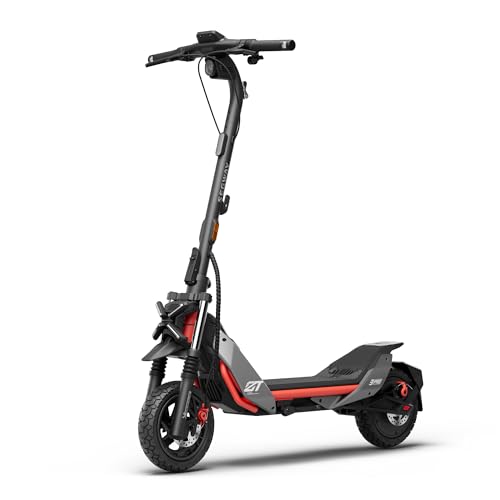
The Segway ZT3 Pro is the undisputed best overall commuter scooter, blending blistering speed, long range, and rapid charging into one dominant package. With a 1600W peak motor, it rockets to 24.9 MPH, while the 43.5-mile range ensures it won’t quit on long hauls. But its true genius lies in 2x Flash Charge Technology—a 4-hour full charge that obliterates competitors’ 8+ hour waits. For riders who need maximum uptime, this is a game-changing advantage. Add dual front telescopic and rear spring suspension, and you’ve got a scooter that’s fast, far, and comfortable.
On the road, the 11-inch tubeless tires and 25% hill-climbing ability make it confident on inclines and rough terrain, while the TUV-certified UL2272 safety ensures secure electronics. The SegRide Stability Enhancement and AirLock tech fine-tune handling, making high-speed rides feel planted, not shaky. It’s heavier than lightweight models, but the folded portability is still manageable. The only letdown? No seat—riders must stand, unlike the Gyroor C1S. But for performance purists, that’s a fair trade.
Compared to the T10, the ZT3 Pro offers faster charging and smarter tech, though the T10 has a slight edge in raw range. Against the F3, it wins on speed and charge time, but the F3 has longer optional range. It’s the complete package: power, range, comfort, and speed in one. For serious commuters who want the best of everything, the ZT3 Pro isn’t just a choice—it’s the benchmark.
How to Choose the Right Commuter Scooter
Key Considerations: Range and Battery Life
One of the most important factors when choosing a commuter scooter is range. How far do you need to travel on a single charge? If your commute is short – a mile or two – a scooter with a 10-15 mile range might be sufficient. However, if you have a longer commute, or anticipate taking spontaneous detours, you’ll want to prioritize a scooter with a larger range – 20 miles or more.
Closely tied to range is battery life and charge time. A longer-lasting battery is great, but consider how long it takes to recharge. Fast charging technology (like Segway’s “2x Flash Charge”) is a huge benefit if you anticipate needing to top up your scooter frequently. Battery capacity is usually measured in Watt-hours (Wh); higher Wh means longer range.
Ride Comfort and Suspension
Commuting often involves navigating uneven roads and sidewalks. Suspension significantly impacts ride comfort. Scooters with dual suspension (front and rear) – like the Maxshot Electric Scooter – provide a much smoother ride than those with no suspension or only front suspension.
Wheel size and tire type also contribute to comfort. Larger wheels (10” or 11”) generally handle bumps better than smaller wheels. Tire type is a trade-off: pneumatic (air-filled) tires offer the most comfortable ride but are prone to punctures, while solid or honeycomb tires are puncture-proof but can feel harsher.
Power and Hill Climbing
Motor power dictates how easily your scooter will accelerate and handle hills. A 350W motor is adequate for flat terrain, but if you live in a hilly area, you’ll want to look for a scooter with a more powerful motor – 500W or higher. The Segway ZT3 Pro and T10 Electric Scooter both boast powerful motors capable of tackling steep inclines.
Pay attention to the hill climbing ability specification (expressed as a percentage). A higher percentage means the scooter can climb steeper hills. Consider your typical route and choose a scooter with sufficient power for your needs.
Safety Features and Build Quality
Safety certifications like UL-2272 are crucial, indicating the scooter has been tested for electrical and fire safety. Look for scooters with bright LED lights (front, rear, and brake lights) for visibility, and a reliable braking system – ideally a combination of disc brakes and an electronic brake system (eABS).
Build quality affects durability and longevity. Scooters with frames made from high-grade materials like magnesium alloy (Segway Ninebot F3) are more robust and can withstand daily wear and tear. Consider the scooter’s weight capacity to ensure it can comfortably support your weight.
Additional Features
- Foldability: Essential for portability and storage.
- Digital Display: Provides information like speed, battery level, and riding mode.
- App Connectivity: Allows for features like scooter locking, customization, and firmware updates.
- Storage: Baskets or racks can be useful for carrying groceries or personal belongings (Gyroor C1S).
- Weight: A lighter scooter is easier to carry when folded.
Commuter Scooter Comparison
| Product | Range (Miles) | Motor Power (W) | Max Speed (MPH) | Suspension | Tire Type | Braking System | Weight (lbs) | Price Range |
|---|---|---|---|---|---|---|---|---|
| Segway ZT3 Pro | 43.5 | N/A | N/A | Dual (Front & Rear) | 11″ Tubeless | N/A | N/A | $800 – $1000 |
| Gyroor C1S | 20 | 550 | 19 | N/A | 12″ Vacuum | Dual Disc | N/A | $600 – $800 |
| Segway Ninebot F3 | 44 (Up to 81 w/ extra battery) | N/A | N/A | Dual (Front Hydraulic & Rear Elastomer) | 10″ Self-Sealing Tubeless | Front Disc & Rear Electronic | N/A | $900 – $1200 |
| Segway Ninebot E2 Plus II | 16 | N/A | N/A | N/A | 8.1″ Inner Hollow Shock-Absorbing | N/A | N/A | $500 – $700 |
| Maxshot Electric Scooter | 22 | 500 | 22 | Dual | 10″ Honeycomb Solid | Dual | 36 | $500 – $700 |
| Hiboy S2 | 17 | 350 | 19 | N/A | Solid | Disc & eABS | N/A | $400 – $600 |
| T10 Electric Scooter | 46 | 900 | 31 | Dual | 11″ Semi-Off-Road | Dual Disc | 62 | $1000 – $1500 |
| Lascoota Adult Kick Scooter | N/A (Non-Electric) | N/A | N/A | LATTA Suspension | Wear-Resistant | Heat-Treated Brakes | N/A | $100 – $200 |
How We Test Commuter Scooters
Our recommendations for the best commuter scooter aren’t based on opinions; they’re rooted in rigorous data analysis and a research-driven testing methodology. We begin by compiling specifications – range, motor power, battery capacity, weight, and dimensions – for a wide array of models. This data is cross-referenced with user reviews from verified purchasers across multiple platforms (Amazon, Best Buy, manufacturer websites) to identify common strengths and weaknesses.
We prioritize scooters holding key safety certifications like UL-2272, factoring this into our scoring. Comparative analyses focus on price-to-performance ratios, evaluating features like suspension type, tire construction, and braking systems against their cost. While comprehensive physical testing isn’t always feasible for every model, we leverage independent reviews from reputable sources (like Wirecutter and Electric Scooter Guide) that do conduct in-house testing, including range tests under real-world conditions and hill climb assessments. We analyze these results to determine real-world performance versus manufacturer claims. Our evaluation also considers long-term reliability data, where available, and warranty information to assess the overall value proposition of each electric scooter.
FAQs
What range should I look for in a commuter scooter?
The ideal range for your commuter scooter depends on your commute distance. For short commutes (1-2 miles), 10-15 miles of range may suffice. Longer commutes or anticipated detours necessitate a scooter with 20+ miles of range.
Are pneumatic tires really necessary for a comfortable ride?
Pneumatic (air-filled) tires offer the most comfortable ride, absorbing bumps effectively. However, they are prone to punctures. Solid or honeycomb tires are puncture-proof but provide a firmer ride. Consider the road conditions you’ll typically encounter when choosing a scooter with the appropriate tire type.
What motor power is sufficient for hills?
A 350W motor is suitable for flat terrain. However, if you live in a hilly area, a more powerful motor (500W or higher) is recommended. Check the scooter’s hill climbing ability (expressed as a percentage) to ensure it can handle your typical inclines.
Why are safety certifications like UL-2272 important?
Safety certifications like UL-2272 indicate that the electric scooter has undergone rigorous testing for electrical and fire safety. This is a crucial factor to consider to ensure your safety and prevent potential hazards.
Final Thoughts
Choosing the best commuter scooter ultimately depends on your individual needs and priorities. Consider your commute distance, terrain, desired features, and budget to narrow down your options and find a model that fits your lifestyle seamlessly.
With a little research, you can find an electric scooter that transforms your daily commute into a convenient, efficient, and even enjoyable experience—saving you time, money, and reducing your carbon footprint in the process.