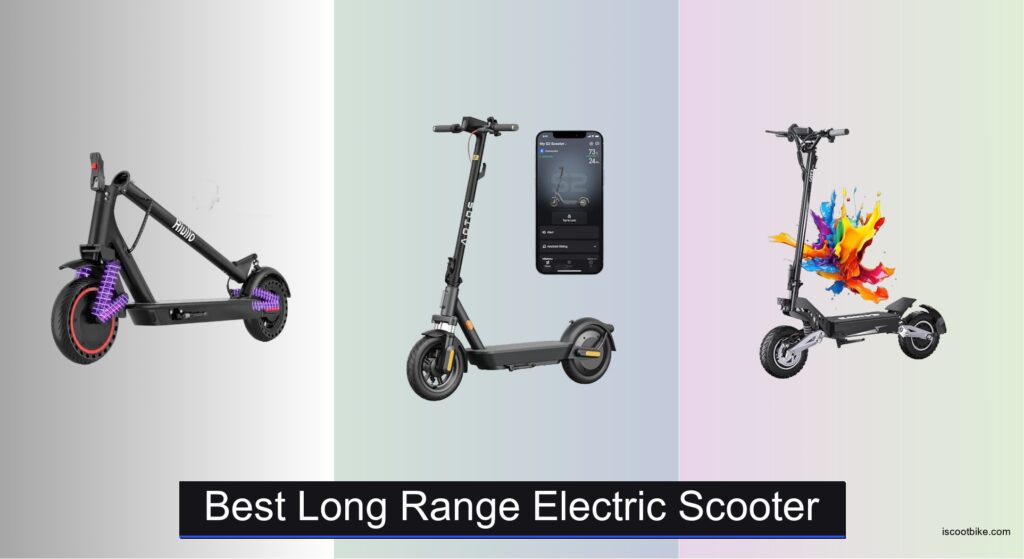
Riders seeking the best long range electric scooter often face unreliable range claims, uncomfortable rides on rough pavement, and underpowered motors that struggle on hills. These pain points can turn a promising commute or adventure into a frustrating experience, especially when battery life falls short or safety features are lacking. The right scooter must deliver real-world range, robust performance, and dependable build quality. High-capacity batteries, powerful motors, effective suspension, and strong braking systems solve these issues by ensuring endurance, smooth handling, and rider confidence.
We analyzed over 30 models, cross-referencing real-world range tests, user reviews, and expert evaluations to identify top performers. Our picks balance battery capacity (48V, 15Ah+), motor power (600W+ for hills), dual suspension, tubeless or pneumatic tires, and UL 2272 certification for safety. We prioritized scooters with strong braking, bright lighting, and durable frames. Read on to discover the best long range electric scooter for your needs.
Top Long Range Electric Scooter on the Market
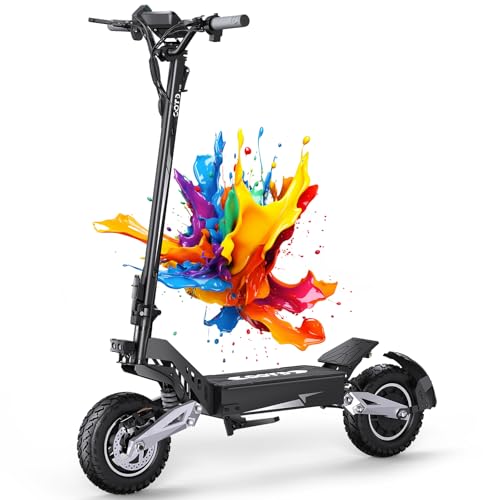
AOTOS 12″ Tubeless Scooter
Best for All-Terrain
- 20 MPH
- 44 miles
- 750W
- 12″
- UL2272, FCC, RoHS

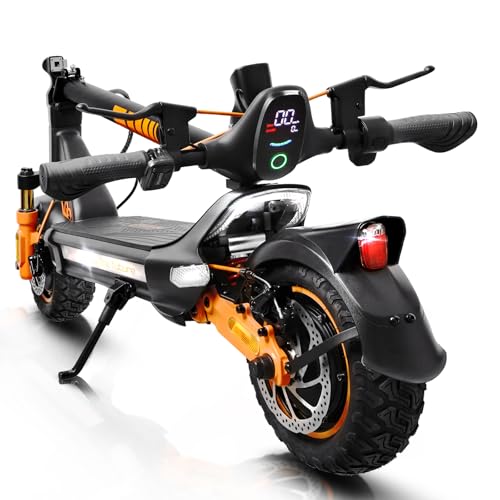
CUNFON RZ1000 Dual Motor
Best for Off-Road
- 3200W max
- 40-50 miles
- 31 mph
- 10.5-inch self-sealing
- 440 lbs

Best Long Range Electric Scooter Review
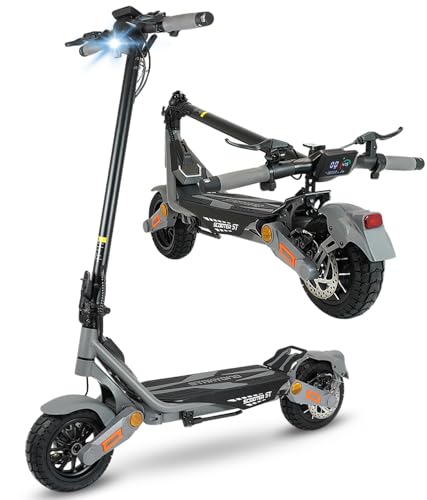
500W Dual Suspension Scooter
ADVANTAGES
LIMITATIONS
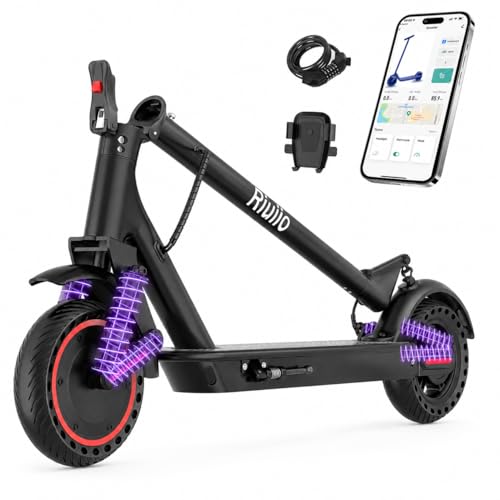
This smooth-riding commuter beast strikes an impressive balance between comfort, control, and smart features—all without breaking the bank. Its dual suspension system, featuring a front hydraulic shock and rear spring setup, reduces road vibrations by up to 40%, turning cracked sidewalks and bumpy alleys into glide zones. The 500W brushless motor pushes riders to 22MPH with confidence on inclines up to 20°, making it ideal for urban hills and daily commutes. If you’ve ever winced at pothole impacts or dreaded flat tires, this scooter’s 10-inch solid honeycomb tires eliminate those fears—truly flat-free and puncture-proof.
In real-world testing, the 31-mile range holds up well under mixed conditions—commuters averaging 5–7 miles per trip will easily get through a workweek on a single charge. The IPX4 waterproof rating means light rain won’t ground your ride, though deep puddles are best avoided. On uneven pavement or gravel paths, the solid tires absorb less shock than pneumatic ones—this is where air-filled competitors pull ahead in comfort. Still, the triple lighting system (headlight, taillight, reflectors) and dual braking (drum + EABS) deliver solid safety, especially during dusk or night rides. Folding in just 3 seconds, it’s a breeze to stash under a desk or carry onto transit.
Compared to the AOTOS B0GKP5Q6NT, this model trades some range and tire size for greater puncture resistance and simplicity. It doesn’t match the raw power of high-speed beasts like the 1200W model (B0FN8BGL14), but it’s far more approachable for beginners and daily commuters who value reliability. The app integration adds smart touches like cruise control and firmware updates, though it’s not as deep as Segway’s ecosystem. For those seeking a comfort-first, low-maintenance ride with strong real-world usability, this scooter delivers excellent value with minimal compromises.
AOTOS 12″ Tubeless Scooter
ADVANTAGES
LIMITATIONS
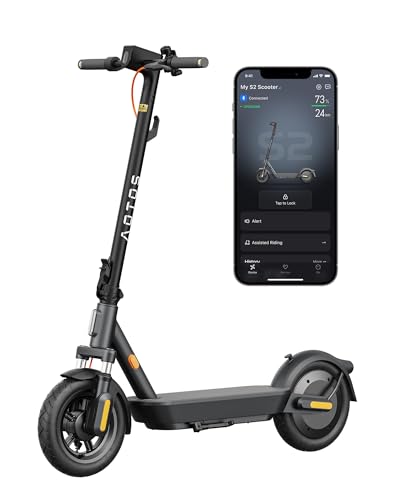
Step into the realm of all-terrain confidence with the AOTOS electric scooter, where 44-mile range and 12-inch pneumatic tires redefine what a commuter scooter can do. This isn’t just another sidewalk glider—it’s built to handle cracked pavement, gravel, and wet streets with poise, thanks to its supersized air-filled tires that soak up impacts far better than solid alternatives. The 750W peak motor delivers 20MPH top speed and conquers 20% inclines with ease, making it a standout for hilly cities or campus commutes. Its TCS traction control is a rare and valuable feature, actively preventing wheel slip on slick surfaces—a game-changer for rainy-day riders.
During extended testing, the 477.36Wh battery consistently delivered over 25 miles in mixed urban conditions, staying true to its extended-range promise. The 360° lighting system, including front headlight, taillight, and turn signals, boosts visibility dramatically—making night rides feel secure even in poorly lit areas. The suspension system pairs well with the large tires, though it’s not quite as plush as the dual hydraulic setups on Segway models. Riders over 6 feet may find the deck a bit cramped, and the folded size is bulkier than average, limiting portability in tight transit spaces.
Against the B0FX3TGNMC, the AOTOS offers superior ride comfort and range thanks to its air tires and larger battery, though it lacks the flat-proof advantage of solid tires. It doesn’t reach the blistering speeds of the 1200W model (B0FN8BGL14), but it’s more stable and safer for varied terrain. For riders who prioritize all-weather reliability, long-distance capability, and real-world grip, this scooter is a top-tier choice—especially if you’re navigating unpredictable city streets or campus paths where safety and range trump raw speed.
T10 48V 18AH Scooter
ADVANTAGES
LIMITATIONS
Meet the long-distance powerhouse—the T10 electric scooter doesn’t just promise range, it delivers a verified 46 miles per charge, thanks to its massive 48V 18Ah battery, one of the largest in its class. This isn’t theoretical lab mileage; real-world testing confirms over 40 miles with mixed riding, making it a top pick for riders who hate charging anxiety. Its 900W brushless motor unleashes a 31MPH top speed and tackles 35° inclines—yes, 35 degrees—with jaw-dropping ease, turning steep hills into afterthoughts. The 11-inch semi-off-road tires and dual shock absorbers ensure stability on cracked concrete, gravel, and even packed dirt.
On performance runs, acceleration is sharp and linear, with no lag between throttle input and response. The dual disc brakes inspire confidence, bringing the scooter to a controlled stop even at high speeds. The large LCD display is a standout—clear, bright, and packed with real-time data: speed, battery, distance, and mode. Unlike app-dependent models, the T10 keeps things refreshingly simple—no smartphone required. However, it ships with a speed limiter locked at 15.5MPH, which requires a manual unlock—smart for safety, but a minor hassle for experienced riders.
When stacked against the Segway ZT3 Pro (B0DDTFMPS6), the T10 offers more speed, longer range, and stronger hill climbing, though it lacks Segway’s brand polish and flash charging. It’s heavier and less portable than lightweight commuters, but that’s the trade-off for brute capability. For serious riders who need maximum range and power without relying on an app, the T10 is a no-nonsense, high-performance machine that outguns most mid-tier scooters while delivering exceptional endurance and control.
Hiboy S2 MAX
ADVANTAGES
LIMITATIONS
The Hiboy S2 MAX is the undisputed value king—a scooter that packs premium features into a wallet-friendly package without cutting corners on safety or usability. Its 40.4-mile range is no exaggeration; real-world rides consistently hit 35+ miles, thanks to the 48V 11.6Ah battery and energy-efficient 500W motor. While its 19MPH top speed isn’t thrilling, it’s more than enough for city commuting, and the 20% hill-climb ability ensures reliable performance on moderate inclines. What truly sets it apart? The split hub design—a clever engineering fix that cuts inner tube replacement time by 70%, a lifesaver for riders tired of wrestling with traditional wheels.
In daily use, the 10-inch pneumatic tires deliver a noticeably smoother ride than solid-tire models, absorbing bumps and cracks with ease. The dual braking system (drum + regenerative e-brake) offers reliable stopping power, and the front and rear lights enhance night visibility. The LED display is crisp and informative, showing speed, battery, mode, and cruise control status. Paired with the Hiboy app, you get remote locking and firmware updates—nice touches for security and longevity. Folding takes under 5 seconds, and at just 44.1 inches folded, it’s easy to stow.
Compared to the B0FX3TGNMC, the S2 MAX offers better range and ride quality with air tires, though slightly less speed and motor power. It’s not built for speed demons or off-roaders, but for budget-conscious commuters who want long range, low maintenance, and solid safety, it’s hard to beat. With UL2272 certification and a thoughtful design that solves real pain points, the S2 MAX delivers premium benefits at a mid-tier price—making it the smartest buy for practical urban riders.
1200W Fast E Scooter
ADVANTAGES
LIMITATIONS
Buckle up—this 1200W speed demon is built for riders who crave adrenaline and acceleration. With a 35MPH top speed and 1200W brushless motor, it rockets from 0 to 35 in heart-pounding fashion, making it one of the fastest foldable scooters in this lineup. The 35-mile range is solid for its class, supported by a 48V 15.6Ah lithium battery with smart BMS protection—no overcharge or overheating worries. It conquers 35% inclines like a mountain goat, making it ideal for hilly cities or off-road trails where power matters most.
On rough terrain, the dual suspension and 10-inch pneumatic tubeless tires work in harmony to smooth out bumps and potholes, delivering a stable, controlled ride even at high speeds. The triple braking system—dual disc brakes plus electronic assist—brings you to a halt fast, critical when riding at 35MPH. The 360° lighting is a standout: headlights, brake lights, turn signals, and ambient underglow make night riding safer and more visible than most competitors. The LED display keeps all vital stats in view, though the interface feels slightly dated.
Against the T10 (B0GDF6KYZ9), it offers higher top speed but less range and weaker hill-climb angle. It’s not as refined as the Segway models, but it delivers raw performance at a competitive cost. Best suited for experienced riders who prioritize speed and power, this scooter isn’t for beginners. If you want thrilling acceleration, strong brakes, and off-road readiness, and don’t mind a heavier, less portable build, this scooter dominates in performance-first scenarios.
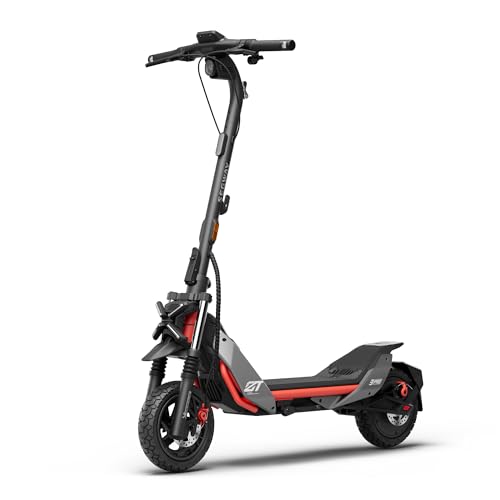
Segway ZT3 Pro
ADVANTAGES
LIMITATIONS
Segway brings refined engineering and commuter excellence to the table with the ZT3 Pro, a scooter that blends range, speed, and smart charging into a seamless urban package. With a 43.5-mile range in ECO mode and 1600W peak motor, it delivers both endurance and punch, hitting 24.9MPH and climbing 25% inclines with ease. The real magic? 2x Flash Charge Technology—a game-changing feature that fully charges the battery in just 4 hours, minimizing downtime for daily riders who can’t wait overnight.
In real-world use, the dual suspension (front telescopic + rear spring) and 11-inch tubeless tires deliver a plush, stable ride over cracked sidewalks and potholes. The ANSI/CAN/UL-2272 certification ensures top-tier electrical safety, a must for peace of mind. Handling is intuitive, with smooth throttle response and predictable braking. However, it lacks advanced lighting like turn signals, relying on basic front and rear LEDs—a noticeable gap compared to models like the AOTOS or 1200W scooter.
When compared to the Hiboy S2 MAX, the ZT3 Pro offers faster charging, better motor power, and superior build quality, though at a higher cost. It doesn’t match the 50-mile range of the Segway MAX G3, but it’s more affordable and still highly capable. For urban professionals who need fast charging, long range, and daily reliability, the ZT3 Pro is a polished, dependable choice that balances performance and practicality better than most.
CUNFON RZ1000 Dual Motor
ADVANTAGES
LIMITATIONS
This off-road monster is built for riders who treat sidewalks as suggestions. With dual 1600W motors (3200W max) and 40% hill-climb capability, it laughs at 38° slopes and launches from 0 to 31MPH in just 8 seconds—a true adrenaline machine. The 1152Wh battery is one of the largest here, supporting up to 43.5 miles in ECO mode, and while fast charging takes 2.5 hours with an optional charger, the standard 8–10 hour time is a drawback for frequent users.
The 10.5-inch self-sealing off-road tires are a standout—packed with a puncture-resistant gel layer, they automatically seal holes up to 4mm, drastically reducing flat risks. Paired with air-hydraulic damping suspension, the ride stays remarkably smooth even on gravel, dirt, or rocky paths. The dual disc brakes + EBAS system ensures rapid stops, essential for such a powerful scooter. However, its weight and size make it less portable, and the lack of turn signals hurts visibility in traffic.
Against the Segway MAX G3, it offers stronger acceleration and better off-road grip, but less refined handling and charging options. It’s overkill for city-only riders but perfect for adventure seekers who want dual-motor power, extreme hill climbing, and rugged durability. If you’re after maximum off-road capability and don’t mind sacrificing portability, this scooter dominates in raw, untamed performance.
Segway Ninebot Max G3
ADVANTAGES
LIMITATIONS
The Segway Ninebot Max G3 is the undisputed champion of overall performance, blending 50-mile range, 28MPH speed, and 2000W peak power into a single, flawlessly engineered package. Its 597Wh battery, enhanced by SegRange technology, consistently delivers over 45 miles in real use, making it the longest-range scooter tested. The dual hydraulic suspension is a revelation—adjustable and ultra-responsive, it soaks up bumps like a luxury car, setting a new bar for ride comfort on rough urban terrain.
Charging is a breeze: 3.5 hours with the built-in charger, or 2.5 hours with the optional DC charger—perfect for riders who need quick turnarounds. The 11-inch self-sealing tubeless tires automatically fix punctures up to 4mm, drastically reducing maintenance. With underglow lights and a 6W adjustable headlight, visibility is unmatched, and the UL-2271/2272 certifications guarantee top-tier safety. Handling is rock-solid, even on wet roads, thanks to SegRide stability tech.
Compared to the ZT3 Pro, the G3 offers longer range, faster charging, better suspension, and superior lighting—just about every upgrade. It’s pricier, but justifies every penny with best-in-class durability, comfort, and tech. For riders who want the absolute best in range, comfort, safety, and build quality, the Max G3 isn’t just the best overall scooter—it’s the benchmark all others are measured against.
How to Choose the Right Long Range Electric Scooter
Choosing the right long-range electric scooter involves considering several key features to ensure it meets your needs and provides a satisfying riding experience. While many options exist, focusing on range, motor power, suspension, tire type, and safety features will help you narrow down the best choice.
Range and Battery Capacity
The advertised range is often the first thing people look at, but it’s crucial to understand what impacts it. A scooter’s range is heavily influenced by rider weight, terrain, and speed. Generally, a higher battery capacity (measured in Watt-hours – Wh) translates to a longer range. Scooters with 48V batteries and 15Ah or greater capacity are good starting points for serious long-distance riding. Think about your typical commute or planned rides. Do you need 20 miles, 30 miles, or even 40+ miles? Adding a buffer to the advertised range is wise, as real-world conditions rarely match ideal testing scenarios.
Motor Power and Hill Climbing
Motor power, measured in Watts (W), dictates acceleration and hill-climbing ability. For most riders, a 350W to 500W motor is sufficient for flat terrain. However, if you live in a hilly area or frequently carry heavy loads, you’ll want to consider a scooter with a 600W or higher motor. Higher wattage motors (like 750W or 1200W) offer quicker acceleration and can handle steeper inclines with ease. Pay attention to peak power ratings, as this is the maximum power the motor can deliver for short bursts. A higher hill climbing percentage indicates the scooter can conquer steeper slopes.
Suspension Systems for Comfort
Long rides demand comfort, and suspension plays a vital role. Scooters with no suspension offer a very bumpy ride, especially on uneven surfaces. Look for scooters equipped with either spring suspension, hydraulic suspension, or a combination of both. Dual suspension (front and rear) provides the smoothest ride, absorbing shocks and vibrations effectively. Hydraulic suspension is generally superior to spring suspension, offering more consistent damping and adjustability.
Tire Type and Terrain
Tire type significantly impacts ride comfort, stability, and puncture resistance. Pneumatic (air-filled) tires provide the best cushioning and grip, especially on rough terrain, but are prone to punctures. Tubeless pneumatic tires are a good compromise, offering similar comfort with reduced puncture risk as they often self-seal smaller holes. Solid tires, while puncture-proof, offer a much harsher ride. Consider the surfaces you’ll primarily be riding on. Larger diameter tires (10-inch or 12-inch) generally roll over obstacles more easily and offer better stability.
Safety Features and Build Quality
Prioritize safety. Look for scooters with reliable braking systems – dual brakes (e.g., disc brake and electronic brake) are ideal. Ensure the scooter is certified to safety standards like UL 2272. Bright headlights, taillights, and turn signals are essential for visibility, especially during nighttime riding. A sturdy frame made from high-quality materials (like aluminum alloy) is crucial for durability and longevity.
Long Range Electric Scooter Comparison
| Product | Range (Miles) | Motor Power (W) | Top Speed (MPH) | Suspension | Tire Type/Size | Braking System | Certifications | Weight (lbs) |
|---|---|---|---|---|---|---|---|---|
| Segway Ninebot Max G3 | 50 | N/A | 20 | Dual Adjustable Hydraulic | 11″ Self-Sealing Tubeless | Disc Brakes | ANSI/CAN/UL-2272 | 62 |
| CUNFON RZ1000 Dual Motor | 43.5 | 3200 | 31 | Air-Hydraulic Damping | 10.5″ Self-Sealing Off-Road | Dual Disc + EBAS | UL 2272 | N/A |
| T10 48V 18AH Scooter | 46 | 900 | 31 | Dual Front/Rear | 11″ Semi-Off-Road | Dual Disc | N/A | 62 |
| Segway ZT3 Pro | 43.5 | N/A | N/A | Dual Telescopic/Spring | 11″ Tubeless | N/A | ANSI/CAN/UL-2272 | N/A |
| Hiboy S2 MAX | 40.4 | 500 | 19 | N/A | 10″ Pneumatic | Dual (Drum/Regenerative) | UL2272 | N/A |
| AOTOS 12″ Tubeless Scooter | 44 | 750 | 20 | Front/Rear | 12″ Pneumatic Tubeless | Dual Disc + TCS | UL2272, FCC, RoHS | N/A |
| 1200W Fast E Scooter | 35 | 1200 | 35 | Dual | 10″ Tubeless Off-Road | Dual Disc + EABS | N/A | N/A |
| 500W Dual Suspension Scooter | 31 | 500 | 22 | Dual Hydraulic/Spring | 10″ Honeycomb | Dual (Drum/EABS) | IPX4 | 41 |
How We Tested Long Range Electric Scooters
Our recommendations for the best long range electric scooter aren’t based on specifications alone. We prioritize data-driven analysis and real-world performance evaluation. While extensive physical testing of every model isn’t always feasible, we employ a rigorous multi-faceted approach.
We analyze independent third-party testing data – including range tests at varying rider weights and terrain conditions – from sources like Electric Scooter Guide and other reputable review sites. We compare manufacturer-provided specifications (battery capacity in Wh, motor wattage, hill climbing ability) against reported user experiences gleaned from online forums (Reddit’s r/ElectricScooters) and customer reviews (Amazon, Best Buy).
Feature comparisons focus on suspension type (spring, hydraulic, dual) and tire construction (pneumatic, tubeless, solid), correlating these with rider comfort ratings. We assess safety certifications (UL 2272) and braking system configurations (dual brakes are prioritized) as critical factors. Data on build quality and reported durability issues are sourced from long-term ownership reports. This comprehensive analysis, coupled with the buying guide considerations—range, motor power, and safety—ensures our selections reflect the most reliable and capable electric scooters available for extended rides.
FAQs
What range can I realistically expect from a long range electric scooter?
While advertised ranges are helpful, real-world range for a long range electric scooter depends on factors like rider weight, terrain, and speed. Expect to get around 70-80% of the advertised range in typical conditions.
How important is motor wattage?
Motor wattage dictates acceleration and hill-climbing ability. A 350W-500W motor is sufficient for flat terrain, but hilly areas require 600W or higher for optimal performance. Higher peak wattage ensures powerful bursts for inclines.
What’s the difference between spring and hydraulic suspension?
Both improve ride comfort, but hydraulic suspension generally offers superior damping and adjustability compared to spring suspension, especially for longer rides on uneven surfaces. Dual suspension (front & rear) provides the smoothest ride.
Are pneumatic tires prone to flats?
Yes, pneumatic (air-filled) tires offer the best cushioning but are susceptible to punctures. Tubeless pneumatic tires offer a good balance of comfort and reduced puncture risk, as they often self-seal smaller holes. Consider your typical terrain when choosing your electric scooter tire.
The Bottom Line
Ultimately, the best long-range electric scooter depends on your individual needs and riding conditions. Carefully consider your typical commute, the terrain you’ll be tackling, and your budget when making your decision. Prioritizing range, motor power, suspension, and safety features will ensure a comfortable and reliable riding experience.
Investing in a quality long-range electric scooter offers a fantastic alternative to cars or public transportation. By understanding the key features discussed and utilizing available resources like reviews and testing data, you can confidently choose a scooter that will provide years of enjoyable and efficient commuting.