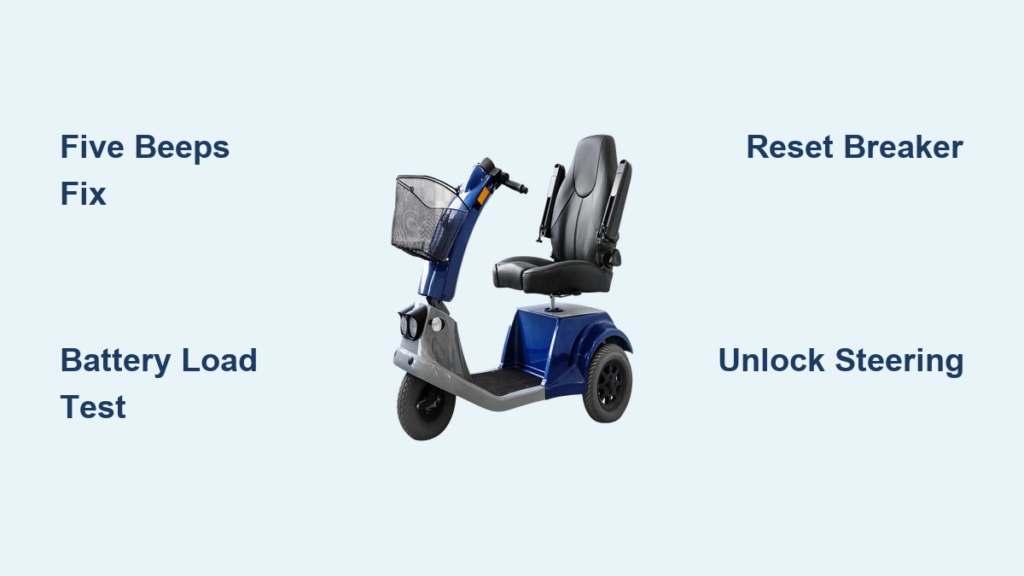
If your mobility scooter suddenly stops working, you do not need to haul it to a repair shop. Mobile scooter repair services bring expert diagnostics and fixes directly to your doorstep, restoring independence without the hassle. Whether it is a dead battery, mysterious beeping, or a steering lock issue, trained technicians arrive in fully equipped vans ready for same-day repairs. From Michigan to Kentucky and Florida, mobile units serve homes, senior living facilities, and VA patients, offering not just repairs but rental replacements during downtime. With support for Medicare, insurance, and financing, these services ensure that mobility is not interrupted by mechanical failure.
This guide breaks down everything you need to know about mobile scooter repair, from diagnosing common issues like five-beep error codes to replacing fuses, testing batteries under load, and unlocking seized steering columns. You will also learn how to maintain your scooter, understand warranty coverage, and access trusted regional providers so you can stay mobile with confidence.
In-Home Repair vs. Shop Service
Choose Mobile for Same-Day Fixes
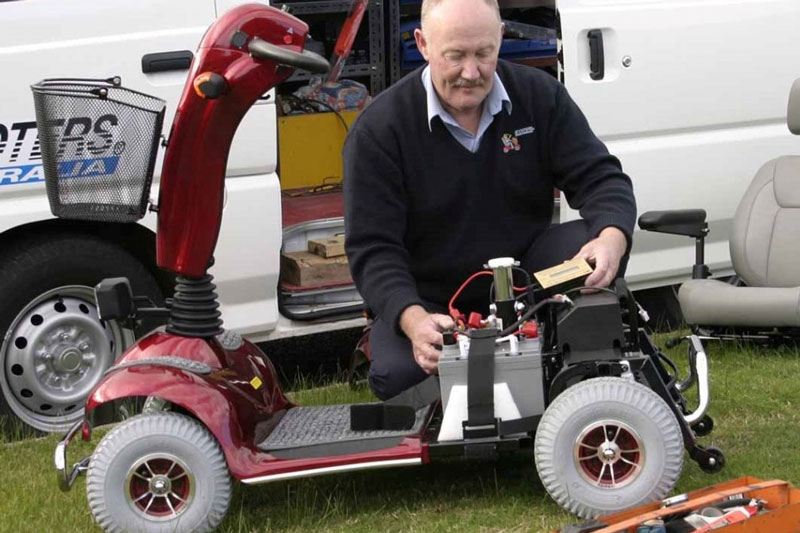
When your scooter will not power on or move, waiting days for a shop repair is not an option. In-home mobile repair eliminates transport challenges by sending certified technicians straight to your location. These service vans carry essential tools, replacement batteries, fuses, connectors, and controllers, enabling most repairs in under two hours. Ideal for users with limited mobility, this model covers major regions including Ann Arbor, Flint, Louisville, and Orlando, often offering next-day appointments, even for after-hours calls.
Mobile technicians handle everything from simple brake resets to full electrical diagnostics. If the issue requires bench-level work, many providers offer a pickup-and-delivery solution: they collect your scooter, repair it at their facility, and deliver a sanitized rental unit so you never lose mobility.
When Pickup and Rental Are Needed
Not all problems can be fixed on-site. Complex issues like motor failure, controller malfunctions, or motherboard damage may require specialized equipment only available in a workshop. In these cases, mobile services use a seamless pickup, repair, and rental system. After assessing the scooter, the technician arranges transport to their facility and delivers a temporary mobility device, fully set up and demonstrated in your home.
These rental scooters are cleaned and safety-checked before each use. The process ensures continuity of care, especially for seniors or disabled users who rely on their equipment daily. Once repairs are complete, the original scooter is returned, tested, and verified for safe operation.
Find Trusted Local Providers
Access to reliable mobile scooter repair depends on your region. In Michigan, companies like Wheelchair and Scooter Repair™ (WSR) cover Midland, Farmington, Howell, and Brighton with A+ BBB-rated service. They specialize in in-home fixes and accept Medicare, private insurance, and worker’s comp. Other key players include Midwest D.M.E. Supply and National Seating & Mobility.
In Kentucky, Mobility City serves Louisville, Shepherdsville, and Prospect with VA-partnered mobile repairs and rental support. Florida residents can turn to Scooter Repair Florida in Orlando, which extends services to e-bikes, hoverboards, and lithium-powered scooters. Most providers stock parts for top brands like Pride, Golden, Chicago Scooter Co., and NIU, regardless of where you bought the scooter.
Decode Common Error Signs
Five Beeps? Check Drive Lever Position
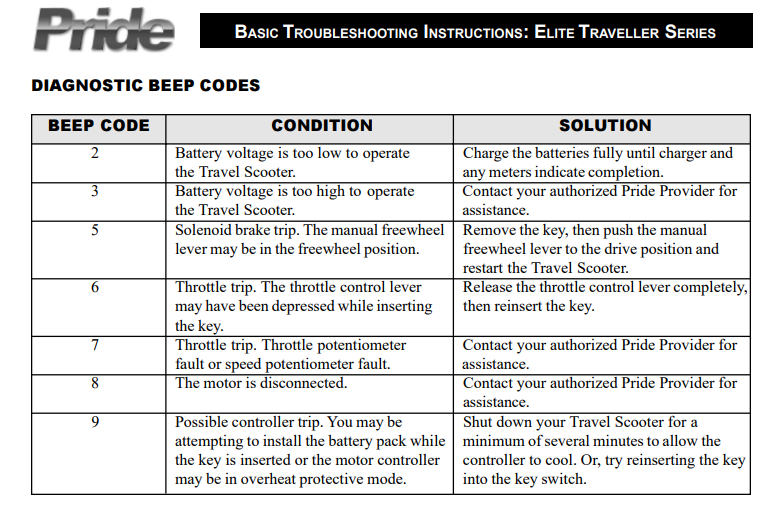
One of the most frequent issues reported is a scooter that powers on, emits five beeps, and will not move. This specific code appears primarily on Pride Mobility GoGo scooters and signals that the automatic brake system is engaged. The cause is that the drive lever is in neutral when power is applied.
To fix this issue, follow these steps:
- Turn off the scooter.
- Switch the freewheel lever to “freewheel” mode.
- Move the drive lever to the forward (drive) position.
- Return freewheel to “drive” mode.
- Power on the scooter.
This resets the brake override. Always consult your user manual for model-specific beep codes, as many manufacturers use five beeps to indicate brake lock.
No Power? Test Battery Under Load
A scooter showing no signs of life often points to battery failure, even if the charger indicates a full charge. Lead-acid batteries typically last about 2 years, with heat accelerating degradation. Do not rely on surface voltage alone; perform a load test.
To perform a proper battery test:
- Measure resting voltage (should be ≥24V for 24V systems).
- Have someone engage the throttle while re-measuring.
- If voltage drops more than 2–3V, the battery is weak and needs replacement.
Technicians use digital multimeters to confirm this. Weak batteries may start the scooter but fail under resistance, especially on inclines.
Sudden Shutdown? Reset Circuit Breaker
If your scooter cuts out mid-ride, especially after climbing a hill or getting stuck, check the resettable circuit breaker. Often a small red or black button near the battery pack or power connector, this safety device trips during overloads.
To restore power:
- Ensure the scooter is clear of obstructions.
- Press the reset button firmly.
- Power on and test operation.
This quick fix prevents motor burnout and is common after off-road use or exceeding weight limits.
Fix Steering and Seat Issues
Unlock Seized Steering Column
Cannot turn the handlebars? Your scooter likely has an active steering lock, a safety feature engaged during transport. Look for a small knob at the base of the steering column marked with a triangle and exclamation point.
To unlock the steering:
- Push the knob in.
- Rotate counterclockwise 90 degrees.
- Test handlebar movement.
To lock the steering for storage or lifting, push and turn clockwise. Never lift the scooter by the tiller if the lock is disengaged, as this can damage internal components.
Seat Will Not Lift? Remove Storage First
On models like the Revo 2.0 or Pride Go Chair, the seat may resist removal due to closed under-seat storage bins. These compartments physically block upward movement.
To remove a stuck seat:
- Open both left and right storage doors fully.
- Grasp the seat firmly in the center.
- Lift straight up without tilting.
The seat connects via a metal pin into a rubber-lined socket. Lifting at an angle causes friction and binding. If the seat rotates, hold the release lever up while lifting.
Armrests Uneven? Adjust with Allen Key
Misaligned armrests lead to poor posture and discomfort. Most models allow height adjustment via a bolt at the top of the armrest post.
To level the armrests:
- Loosen the Allen bolt and nut.
- Raise or lower the armrest.
- Re-tighten securely.
- Repeat on the other side.
Ensure both arms are at equal height to prevent shoulder strain during long rides.
Diagnose Electrical Failures
Check Battery Connections First
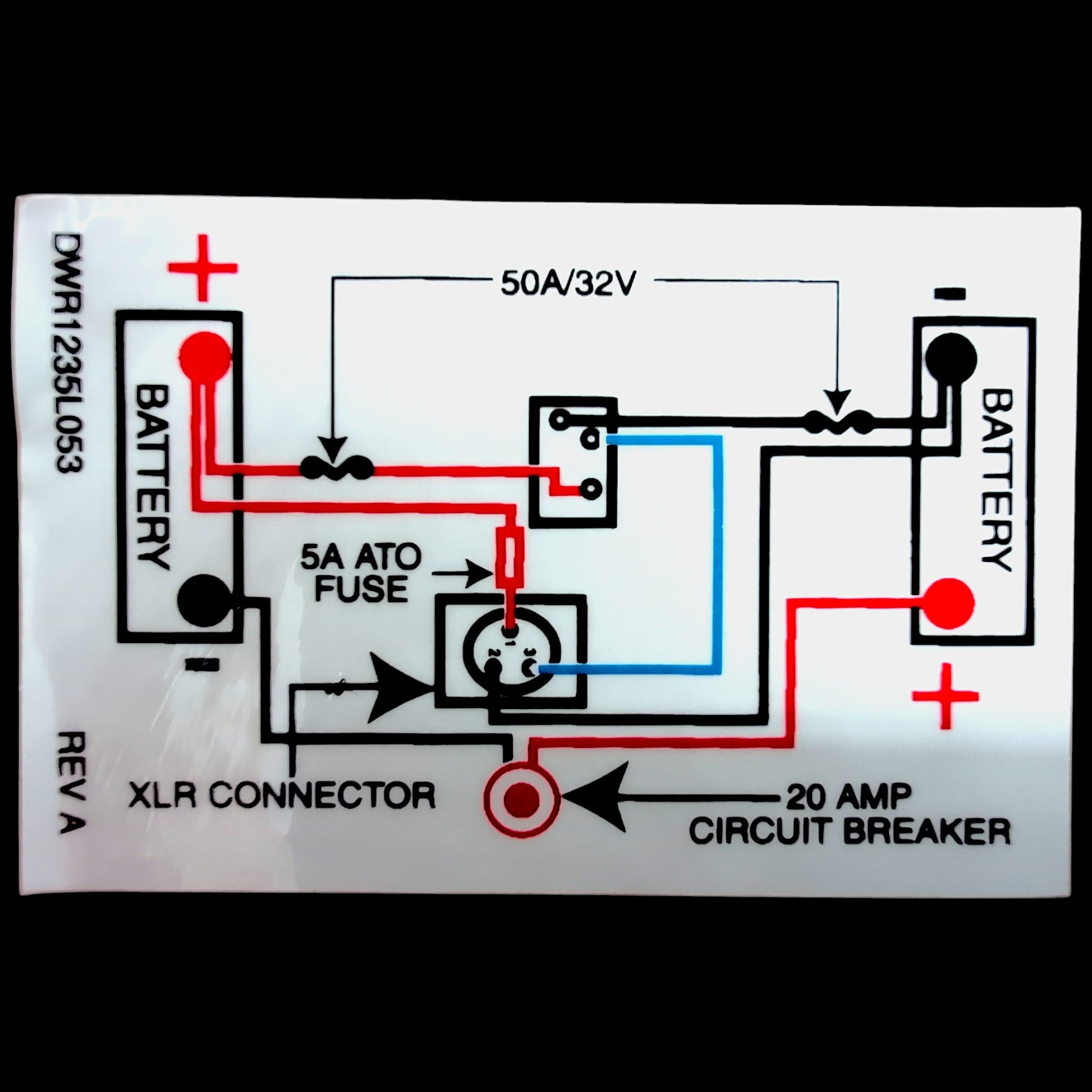
Before replacing batteries, inspect all electrical connections. Loose terminals are a leading cause of intermittent power loss.
To inspect connections:
- Lift the seat to access the battery compartment.
- Verify nuts and bolts on battery posts are tight.
- Inspect the black and white connector between batteries and power block; this often becomes loose or sunken.
- Ensure screws on the power block itself are secure.
Corrosion or vibration can break contact, mimicking battery failure. Clean terminals with a wire brush if needed.
Replace Blown Fuses Quickly
Fuses protect the motor and electronics from surges. A 10-amp fuse near the power block is standard on most scooters.
To check and replace a fuse:
- Use needle-nose pliers to pull the fuse.
- Look inside: a cracked or broken metal rod means it is blown.
- Replace with an identical 10A fuse.
Fuses blow due to:
- Steep inclines exceeding 8–12 degrees
- Exceeding weight capacity
- Rough terrain use
Always carry spares. A blown fuse left unreplaced risks permanent motor damage.
Identify Power Block Faults
The power block distributes electricity from the batteries to the controller and motor. If connections are tight and fuses are good but there is still no power, the block itself may be faulty.
Signs of power block failure include:
- Burn marks or melting around terminals
- Intermittent power despite good battery
- No voltage output to controller
Only trained technicians should replace power blocks due to high-current risks. Mobile units often stock common models for same-day swaps.
Maintain Scooter Longevity

Schedule Preventative Maintenance
Regular maintenance prevents breakdowns and extends scooter life. Key tasks include:
- Battery load testing every 6 months
- Tire inspection for wear (solid or pneumatic)
- Steering lock function check
- Freewheel lever operation test
- Connector and terminal cleaning
Many providers offer annual maintenance plans that include tune-ups, safety checks, and priority service. These reduce emergency repair needs by catching issues early.
Replace Worn Tires and Brakes
Tires degrade over time, especially with outdoor use. Solid tires resist punctures but harden with age. Pneumatic tires require regular inflation and are prone to flats. Replace tires when tread is worn or sidewalls crack.
Brakes should engage smoothly without dragging. If the scooter rolls in “off” mode or brakes squeal, have them inspected. Worn brake pads or misaligned sensors can compromise safety.
Store Lithium Batteries Safely
For scooters with lithium-ion batteries, proper storage is critical. Unlike lead-acid, lithium batteries do not tolerate deep discharge.
Storage tips include:
- Charge to 50–80% before long-term storage.
- Store in a cool, dry place, not garages or vehicles.
- Recharge every 3–4 weeks.
- Never leave on charger indefinitely.
Lithium systems offer longer range and lighter weight but require more careful handling.
Know Your Warranty Coverage

Compare Brand Warranty Terms
Warranty length and scope vary significantly by manufacturer. Understanding these terms helps you make informed decisions about repairs and potential replacements.
| Brand | Warranty | Coverage |
|---|---|---|
| Chicago Scooter Co. | 1-year parts | Components only |
| Scootstar | 1-year parts | Excludes wear items |
| Lance, NIU, SYM | 2-year tire-to-tire | Full vehicle |
| Wolf Brand | 2-year parts | Parts and labor |
“Tire-to-tire” means coverage from front to rear, essentially the entire scooter. Always keep service records to validate claims.
Warranty Requires Proper Maintenance
Most warranties require proof of regular maintenance. Skipping tune-ups or using non-OEM parts can void coverage. Mobile repair services often provide documentation for warranty compliance.
If your scooter fails within the warranty period, technicians can file claims directly with the manufacturer. This is especially important for VA-supported users or those covered by Medicare.
Access Veteran and Insurance Support
VA Partnerships Aid Veterans
Many mobile scooter repair providers partner with the Department of Veterans Affairs (VA) to serve eligible veterans. These programs ensure access to:
- Priority repair scheduling
- VA-approved equipment
- Direct billing and claims processing
Mobility City in Kentucky and WSR in Michigan are known for VA collaboration, helping veterans maintain independence with minimal out-of-pocket costs.
Use Insurance and Financing
Financial barriers should not block mobility. Most reputable services accept:
- Medicare
- Private insurance
- Worker compensation
- Financing plans (such as CareCredit)
Coverage often includes battery replacement, motor repairs, and controller fixes, especially if deemed medically necessary. Always verify eligibility before service.
Key Takeaways for Mobile Scooter Repair
Mobile scooter repair is more than convenience, it is a lifeline for those who depend on their scooters for daily independence. With skilled technicians arriving at your door equipped to diagnose beep codes, replace fuses, reset breakers, and fix steering locks, downtime is minimized. Whether you are in Michigan, Kentucky, or Florida, trusted providers offer same-day service, rental backups, and insurance support.
Stay proactive by testing batteries under load, keeping connectors tight, and scheduling annual maintenance. Know your warranty, carry spare fuses, and learn basic resets. By understanding common failures and solutions, you will spend less time stranded and more time moving freely.
Frequently Asked Questions About Mobile Scooter Repair
How do I fix a scooter that beeps five times and will not move?
The five-beep code on Pride Mobility GoGo scooters indicates the automatic brake system is engaged because the drive lever is in neutral. Turn off the scooter, switch to freewheel mode, move the drive lever to drive position, return to drive mode, and power on. This disengages the brakes and stops the beeping.
What causes a mobility scooter to suddenly lose power?
Sudden power loss is often caused by a tripped circuit breaker, blown fuse, or dead battery. Check the reset button near the battery pack, inspect the 10-amp fuse, and perform a battery load test. If voltage drops more than 2–3V under load, the battery needs replacement.
Can mobile technicians repair my scooter at home?
Yes, most common issues including battery replacement, fuse changes, steering lock adjustments, and brake resets can be performed at your location. Mobile vans carry tools, parts, and diagnostic equipment for same-day repairs. Complex issues like motor or controller failure require pickup and shop repair.
How often should I service my mobility scooter?
Schedule professional maintenance every 6 to 12 months, including battery load testing, tire inspection, and connector cleaning. Regular maintenance prevents breakdowns, extends scooter life, and keeps warranties valid.
Does insurance cover mobile scooter repair?
Many insurance plans, including Medicare and private insurance, cover medically necessary repairs like battery replacement, motor repairs, and controller fixes. VA partnerships also provide coverage for eligible veterans. Verify your eligibility before scheduling service.
Where can I find mobile scooter repair services near me?
Regional providers include Wheelchair and Scooter Repair (WSR) in Michigan, Mobility City in Kentucky, and Scooter Repair Florida in Orlando. These companies offer in-home repairs, accept insurance, and provide rental units during complex repairs.