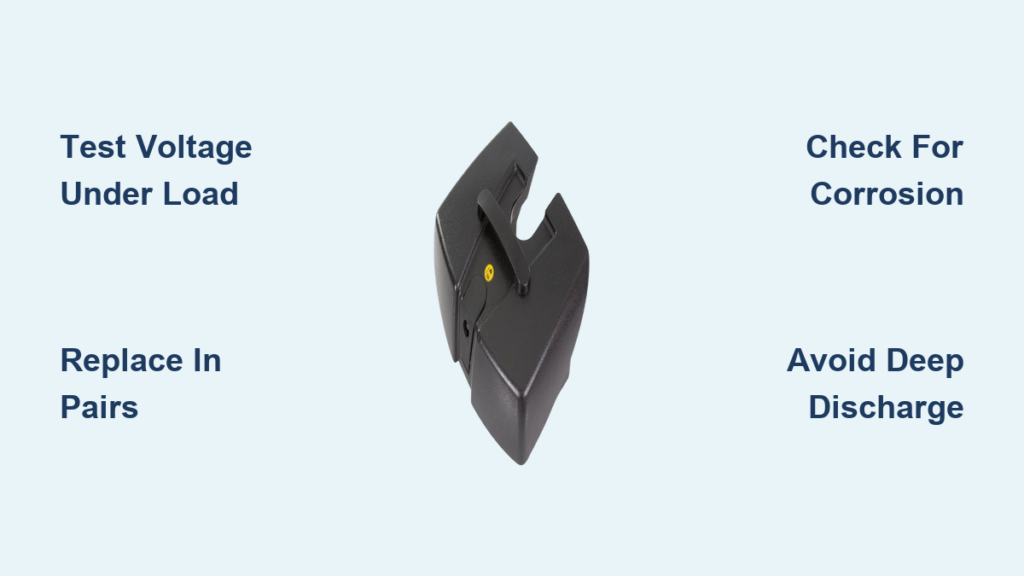
If your mobility scooter suddenly stops working, loses power on hills, or dies minutes after charging, you are dealing with mobility scooter battery problems. These issues are the most common cause of performance complaints, yet many users mistakenly blame motors, controllers, or throttles. Sealed Lead Acid batteries can show full voltage at rest but collapse under load, causing unexpected shutdowns. Understanding how to diagnose and fix these problems saves time, money, and frustration.
This guide walks you through identifying true battery failure, testing voltage under load, and applying proven maintenance strategies. You will learn how to distinguish battery issues from other failures, when to replace batteries in pairs, and how to extend battery life through proper charging and storage habits.
Decode Common Battery Symptoms

Mobility scooter battery problems often mimic more serious mechanical failures. Recognizing the real signs helps prevent unnecessary repairs.
Reduced Range and Power Loss
A significant drop in driving distance is the first red flag. New scooters typically deliver 10 to 15 miles per charge. If your range has fallen below 50 percent, it indicates battery degradation. Users often report making it halfway to their destination before the scooter slows down or stops, even after an overnight charge.
Voltage Sag Under Load
This is the hallmark of failing SLA batteries. The battery reads normal voltage when the scooter is off but drops sharply when you accelerate or climb a hill. A drop to 22 volts or lower under load means the battery cannot sustain power delivery. The scooter may jerk, stutter, or shut off completely, even if the battery gauge shows full.
Unexpected Shutdowns and Slow Acceleration
If your scooter turns off mid-ride, especially on inclines or with added weight, it is likely a battery issue. Slow, sluggish acceleration and difficulty maintaining speed are also telltale signs. Battery-related power loss tends to be inconsistent. The scooter works fine one day, then struggles the next.
Identify Charging and Indicator Issues
Battery problems often reveal themselves through abnormal charging behavior or misleading indicator lights.
Extended or Incomplete Charging
A healthy mobility scooter battery charges fully in 8 to 10 hours. If yours now takes 12 to 16 hours or longer, the cells are degrading. Some batteries appear fully charged immediately after plugging in, only to lose power within minutes of use. This false full reading occurs when surface charge masks deep internal damage.
Charger Light Anomalies
Pay attention to your charger status light. If it fails to turn green, the battery may not be accepting a full charge. Flashing lights irregularly may indicate a communication fault. If it turns green instantly, the battery may not be drawing current properly. Always verify with a voltage test rather than relying on lights alone.
Spot Physical Damage and Corrosion
Visual inspection can uncover hidden issues before they lead to complete failure.
Terminal Corrosion and Buildup
White, green, or blue crust around battery terminals is corrosion. This buildup increases resistance and reduces power flow, mimicking low battery performance. Clean terminals with a baking soda and water solution using a wire brush. Wear gloves and eye protection. Apply dielectric grease after cleaning to prevent future corrosion.
Swelling, Leaks, and Heat
A bulging or warped battery case indicates internal gas buildup or thermal runaway. Never use a swollen battery. Any visible fluid leakage requires immediate replacement. Excessive heat during charging or use suggests overcharging or internal shorting, especially if paired with a mismatched charger.
Test Battery Health Accurately
Resting voltage alone will not reveal true battery condition. You need a load test to confirm performance under real-world conditions.
Use a Digital Multimeter
You only need a basic digital multimeter set to DC voltage. Test at the XLR charging port or directly at the battery terminals.
Perform a Resting Voltage Check
- Unplug the charger and power on the scooter
- Insert red probe into positive, black into negative
- Read the voltage
Results include:
– 25.5 to 26.8 volts indicates a healthy 24V SLA system
– Below 23 volts means deeply discharged or failing
– Below 12 volts per 12V battery requires immediate replacement
– Approximately 29.2 volts is normal for fully charged lithium
A good resting voltage does not guarantee performance. Many weak batteries pass this test.
Conduct a Load Test
This is the definitive way to diagnose mobility scooter battery problems.
- Keep the multimeter connected while the scooter is safe to operate
- Note the resting voltage baseline
- Drive slowly, then accelerate or go uphill to create load
- Watch the voltage in real time
Results:
– Stable at 24 to 25 volts means the battery is healthy
– Drops to 23 to 24 volts indicates early degradation
– Falls below 22 volts means critical failure
– Collapses to 20 volts or less means the battery is dead under load
Diagnose Battery Pack Imbalance

Most 24V scooters use two 12V batteries wired in series. One weak battery drags down the entire system.
Test Each Battery Separately
Disconnect and measure each 12V battery individually. Both should read 12.7 volts or higher when fully charged. A difference of more than 0.5 volts indicates imbalance. Even if one battery tests fine, a weak partner forces it to overwork, leading to premature failure. Always replace batteries in pairs, never just one.
Prevent Premature Battery Failure
Most mobility scooter battery problems stem from poor charging habits and storage conditions.
Charge After Every Use
Unlike car batteries, mobility scooter batteries thrive on regular full charges. Plug in after every ride, even short ones. Avoid deep discharging by charging as soon as the first indicator light dims. Letting the battery drain to zero causes sulfation in SLA batteries.
Avoid Deep Discharge
Riding until the scooter shuts off drastically shortens battery life. Each deep cycle wears down the cells. Recharge when you reach half capacity. Think of it like a smartphone. Topping off daily extends lifespan far better than draining and recharging weekly.
Store Batteries Properly
Long-term storage without maintenance is a leading cause of failure.
Follow Storage Best Practices
- Charge before storing. Always store with a full charge.
- Top up every 2 to 3 weeks. For SLA batteries, charge weekly if possible.
- Keep indoors. Store in a dry, temperature-controlled space.
- Disconnect if possible. This reduces parasitic drain from onboard electronics.
Cold temperatures temporarily reduce range, but repeated exposure without charging leads to permanent damage.
Replace Batteries Correctly
Knowing when and how to replace batteries ensures long-term reliability.
Replace in Pairs Only
Mixing old and new batteries creates imbalance. The newer battery overcompensates, leading to stress and early failure. Even if one battery appears functional, replace both to match age, capacity, and internal resistance.
Match Specifications Exactly
New batteries must match voltage, amp-hour rating, physical size, terminal type, and chemistry. Using a higher amp-hour battery is safe if it fits and matches voltage. Never install a lithium battery unless your scooter charger and controller support it. Doing so risks overcharging or fire.
Choose the Right Battery Type
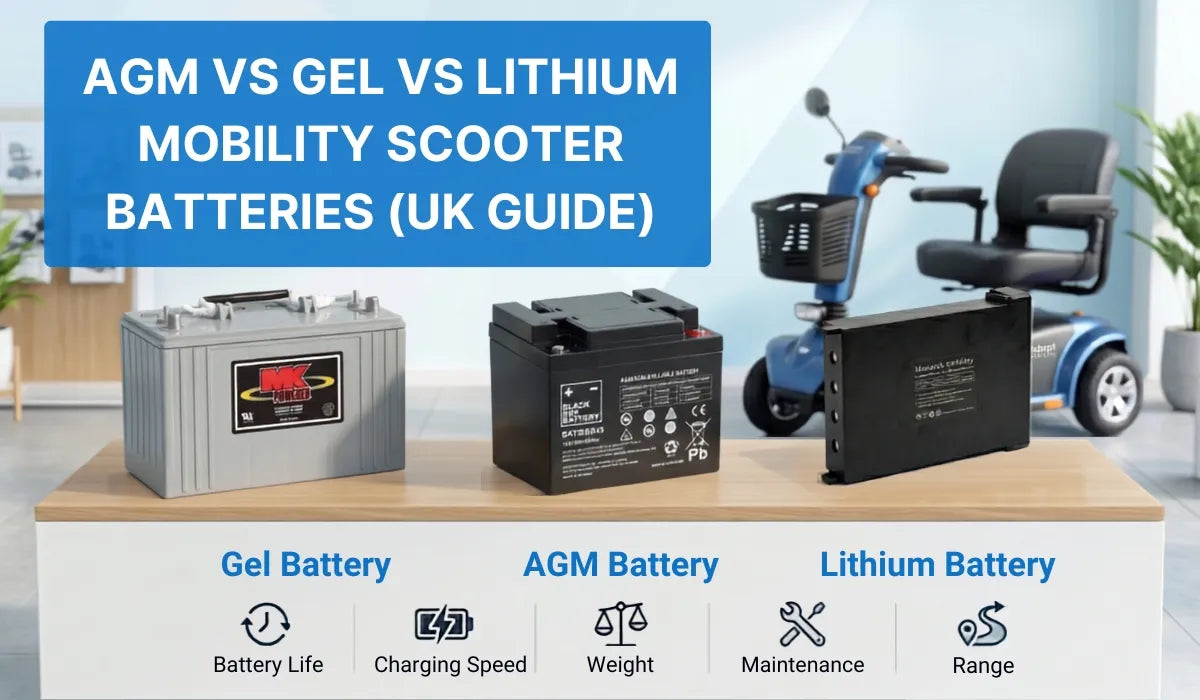
Different battery technologies offer trade-offs in cost, weight, and lifespan.
AGM and Gel Cell Options
AGM batteries are maintenance-free, spill-proof, and offer excellent deep-cycle performance. They are ideal for daily users. Gel cell batteries are more resistant to vibration and rough terrain. They cost slightly more but last longer in bumpy conditions.
Upgrade to Lithium-Ion
Lithium batteries offer lighter weight, 5 plus year lifespan, faster charging, and consistent power until sudden cutoff. They cost more upfront and require a compatible lithium-specific charger. Consult a technician before upgrading if your scooter did not come with lithium.
Avoid Common Charging Mistakes
Using the wrong charger or improper charging habits accelerates failure.
Use the Correct Charger
Never use an SLA charger on a lithium battery. It can cause overheating or fire. Conversely, a lithium charger may not fully charge an SLA battery. Always use the manufacturer-recommended charger. If replacing, match voltage, current, and chemistry type.
Charge Overnight Safely
Modern smart chargers stop automatically when full, making overnight charging safe and recommended. It ensures a complete top-off, which helps prevent sulfation. Avoid cheap, unregulated chargers. They lack safety cutoffs and can damage batteries.
Troubleshoot Non-Battery Issues
If batteries pass load testing, the problem may lie elsewhere.
Check Brake and Throttle Sensors
Many scooters have safety interlocks that disable power if the brake is engaged or the throttle is not resetting properly. Test by ensuring brake levers fully release. Check for stuck freewheel levers. Listen for error beeps or watch for fault codes.
Inspect Charging Port and Cable
If the scooter will not charge, test the charger on another scooter or use a multimeter to verify output. Inspect the XLR port for bent pins, debris, or loose wiring. A damaged cable or port can prevent charging even with healthy batteries.
Follow Annual Maintenance Routine
Proactive care prevents most mobility scooter battery problems.
Schedule Yearly Load Testing
Have a technician perform a professional load test annually, even if performance seems fine. This predicts failure before it leaves you stranded. Combine this with terminal cleaning and connection checks.
Keep Connections Tight
Vibration from daily use can loosen battery cables. Periodically inspect and tighten connections. Loose wires cause arcing, heat, and intermittent power loss.
Frequently Asked Questions About Mobility Scooter Battery Problems
How do I know if my mobility scooter battery is dying?
Watch for reduced driving range, voltage dropping below 22 volts under load, extended charging times exceeding 12 hours, and unexpected shutdowns mid-ride. A load test with a multimeter is the most reliable way to confirm battery failure.
Can I replace just one battery in my mobility scooter?
No. Always replace batteries in pairs. Mixing old and new batteries creates imbalance. The newer battery overcompensates, leading to stress and premature failure of both batteries.
Why does my scooter die even when the battery shows full charge?
This is voltage sag. The battery reads normal voltage at rest but collapses under load when you accelerate or climb hills. This is the classic signature of a degraded SLA battery.
How long do mobility scooter batteries last?
SLA batteries typically last 12 to 24 months with regular use. Lithium batteries can last 5 years or longer. Lifespan depends on charging habits, storage conditions, and usage frequency.
Can I use a lithium battery in my old scooter?
Only if your scooter charger and controller support lithium chemistry. Using an SLA charger on a lithium battery risks overheating, fire, or BMS damage. Consult a technician before upgrading.
Key Takeaways for Fixing Mobility Scooter Battery Problems
Mobility scooter battery problems are often preventable with proper charging, storage, and maintenance. The key is acting early. Do not wait for total failure. Regular load testing, replacing batteries in pairs, and using the correct charger can double battery life and keep your scooter dependable for years.
If performance drops, start with the battery. It is the most likely cause and the easiest fix. Test voltage under load rather than relying on resting voltage or gauge readings. Address charging issues immediately, and store batteries properly during periods of inactivity.