You’re ready to buy a scooter, but the market feels overwhelming. Prices range from $200 kick scooters to $7,000 electric beasts, and every manufacturer claims impressive speed and range. This scooter buying guide cuts through the marketing hype to help you find the perfect ride for your needs, budget, and lifestyle.
You’ll learn how to match motor power to your terrain, why dual brakes are essential above 15 mph, and which specs actually matter. We cover every category from kids’ scooters to hyper-performance electric models, with clear recommendations based on real-world use cases.
Know Your Scooter Type
Electric vs. Kick: Core Differences
Electric scooters deliver motorized speed and convenience. Kick scooters rely on foot power. Your choice depends on distance, effort level, and terrain.
Electric scooters work best for commutes over one mile, hilly areas, or carrying gear. They range from lightweight commuters to high-speed performance models. Trade-offs include added weight, higher cost, and occasional maintenance.
Kick scooters are simpler, cheaper, and never need charging. They’re ideal for short trips, fitness, or kids. Adult big-wheel kick scooters can cover several miles efficiently on smooth pavement.
Match Scooter to Your Use Case
Using the wrong scooter type leads to frustration and safety issues. Consider your primary use before buying.
Prioritize range, portability, and durability for commuting. Look for dual motors or high-wattage single motors (500W+) for hills. Pro scooters with stiff decks and strong frames are essential for tricks. Kids need stability and safety features. Long rides require battery capacity, comfort, and lighting.
Avoid Marketing Hype
Manufacturers frequently exaggerate speed, range, and durability. Assume real-world performance is 60–70% of advertised claims.
A scooter claiming 25-mile range likely delivers 15 miles in mixed conditions. A 30 mph top speed may only be achievable with a light rider on flat ground. Look for independent reviews testing under realistic conditions. Rely on watt-hours (Wh), not voltage alone, for true battery capacity.
Budget Electric Scooters Under $500
Performance Reality Check
Scooters under $500 are entry-level. They’re suitable for short, flat trips but don’t expect reliability or power.
Top speed reaches approximately 15 mph, often less with heavier riders. Advertised range is 8–10 miles, but real-world is closer to 5–7 miles. Motor power usually stays under 300W, similar to shared rental scooters.
These models struggle with inclines and heavier riders. Acceleration feels sluggish, and battery life degrades quickly with frequent use.
Build Quality Limitations
Budget scooters cut corners on components. Tires are solid (airless) only, creating a harsh ride with poor traction. Brakes are typically single mechanical, and stopping distance from 15 mph can exceed 20 feet. Most lack suspension entirely, transmitting every bump directly through the frame.
Portability is a plus. Most weigh under 30 lbs. But frequent use reveals weak joints, flimsy folding mechanisms, and short battery lifespan.
Who Should Buy This Tier
Only consider this tier if you need a backup ride for trips under two miles, you’re on a tight budget and accept limited lifespan, or you ride exclusively on smooth sidewalks or bike paths.
Avoid daily commuting or hilly areas. These scooters wear out fast under regular stress.
Commuter Electric Scooters ($500–$2,000)
Budget Commuter Tier (Under $1,000)
This sweet spot suits first-time buyers wanting real performance. Motor power ranges from 300W to 800W single motor. Speed reaches up to 20 mph. Real-world range hits 12–15 miles. Weight stays under 40 lbs for easy carrying.
Key upgrades over budget models include dual braking systems (mechanical plus electronic), front pneumatic tire for better comfort, and some basic spring suspension. The Unagi E500 stands out with dual motors in this price range.
Ideal for flat to moderate terrain, daily commutes under eight miles, and riders under 180 lbs.
Midrange Commuter Tier (Under $1,500)
This tier offers a significant leap in performance and safety. Motor power reaches up to 1000W, with some dual motor options. Speed exceeds 25 mph. Range extends past 20 miles. Weight often exceeds 40 lbs.
Standard features include full suspension (spring or hydraulic), larger pneumatic tires (8–10 inch), hydraulic or disc brakes, and IP54+ water resistance. Better hill climbing, smoother rides, and longer battery life justify the extra cost for daily commuters or those facing rough roads.
Premium Commuter Tier (Under $2,000)
Built for comfort, safety, and long-term use. Motor power reaches 1000W to 2000W, often dual motor. Speed exceeds 30 mph. Range reaches 25–35 miles. Weight capacity tops 330 lbs.
Features include advanced suspension (coil-over, air piston), hydraulic disc brakes, bright headlights with turn signals and deck lights, and high-capacity batteries (800Wh+). These scooters handle city traffic, hills, and night rides confidently. However, 60+ lbs weight makes portability challenging.
Best for serious commuters who value reliability and don’t need to carry the scooter far.
High-Performance & Premium Scooters
Performance Models (Under $2,500)
These “luxury commuters” deliver serious specs. Dual motors produce 1500W to 2000W total. Speed reaches up to 40 mph. Real-world range hits 30–40 miles. Battery exceeds 1000Wh.
Key upgrades include large tubeless pneumatic tires (10–11 inch), hydraulic disc brakes, powerful lighting systems, and full suspension. This category offers the perfect balance of speed, range, and comfort for longer commutes, hilly cities, or riders wanting car-like performance.
Premium Performance (Under $4,000)
Think of these as sports cars on two wheels. High-end dual motors deliver exceptional power. Speed exceeds 40 mph. Range reaches up to 40 miles, extendable with extra batteries. Large pneumatic tires handle off-road conditions. Hydraulic disc brakes provide high-speed control.
Build quality is top-tier: aircraft-grade aluminum, premium components, advanced damping. Weight exceeds 70 lbs, eliminating portability. But ride quality and safety are unmatched.
Hyper Scooters (Over $4,000)
The extreme end features racing-grade machines. Motor power reaches 3000W to 7000W (like the Dualtron X Limited). Battery capacity hits 1500Wh to 5000Wh+. Speed reaches 50–60+ mph. Range extends 50–80 miles. Weight exceeds 100 lbs.
Zero portability. These require expert handling and full safety gear. Not street-legal in many areas. Only for enthusiasts wanting maximum power, range, and acceleration.
Non-Electric Scooter Types
Pro Scooters for Stunts
Built to survive jumps, grinds, and crashes. Frames use aluminum, steel, or titanium. Decks are wide and stiff. Wheels are hard, small diameter (100–110mm), with high durometer. Bearings are ABEC 7 or 9 for smooth spin. Brakes are foot fender or hand brake style.
Highly customizable. Riders often build their own setups. Best for skate parks and trick riding, not transportation.
Kids’ Scooters: Age-Based Picks
Toddlers ages 2–5 need three-wheel designs for stability. Adjustable handlebars accommodate growth. Lightweight frames (plastic or aluminum) work best. Soft rubber wheels suit indoor and outdoor use. Focus on balance and steering control.
Older kids ages 6–12 transition to two-wheel scooters. Look for reliable brakes (rear fender or disc), durable decks with grip tape, and reflectors or lights for safety. Check weight limits and wheel size (120–200mm).
Big Wheel Kick Scooters
Designed for adult transportation. Wheel size of 8–10 inch provides smooth rolling and speed. Pneumatic or solid tires are options (pneumatic for comfort). Folding mechanisms aid storage. Kickstands enable easy parking.
Great for short errands, office campuses, or backup rides. No motor means zero charging and low maintenance.
Gas-Powered Scooters
Internal combustion models offer longer range. Engine sizes determine capability. 50cc reaches 30–50 mph for local travel. 125cc–170cc hits 60–70 mph for backroads. 250cc+ handles highway speeds.
Pros include fast refueling, long range, and no battery degradation. Cons cover heavier weight, louder operation, and fuel/oil maintenance. Check local licensing and registration requirements.
Key Specs That Actually Matter
Real-World Range vs. Advertised
Never trust the listed range. Real-world performance is 60–70% of claimed figures. A 20-mile advertised range equals approximately 12–14 miles in practice.
Calculate your needs properly. Measure your daily round-trip distance. Double it for safety margin. Add 20% buffer. Target a scooter with 15–18 miles usable range for a six-mile daily commute.
Choose higher watt-hours (Wh) for better range. LG, Panasonic, or Samsung cells last longer than generic brands. Avoid models under 300Wh for daily commuting.
Motor Power: Single vs. Dual
Single motors (350W–1000W) suit flat cities, light riders under 160 lbs, and efficiency priorities. They are lighter, cheaper, and provide better battery life. Cons include struggling on hills and slower acceleration. Minimum for flat areas is 250W. Small hills need 350W–500W.
Dual motors (500W+ per motor) tackle hills, heavy riders over 180 lbs, and fast starts. They deliver instant torque and better hill climbing. Cons are heavier weight and faster battery drain. Riders over 180 lbs should prioritize dual motors.
Braking: Safety First
Mechanical brakes (disc, drum, foot) provide strong stopping power. Stopping from 15 mph takes 10–20 feet. Hydraulic disc brakes are best for high speeds. Pads wear out and need adjustment.
Electronic brakes (regenerative, motor resistance) are too slow for emergencies. Stopping from 15 mph takes 30–40 feet. Never rely on electronic brakes alone above 15 mph.
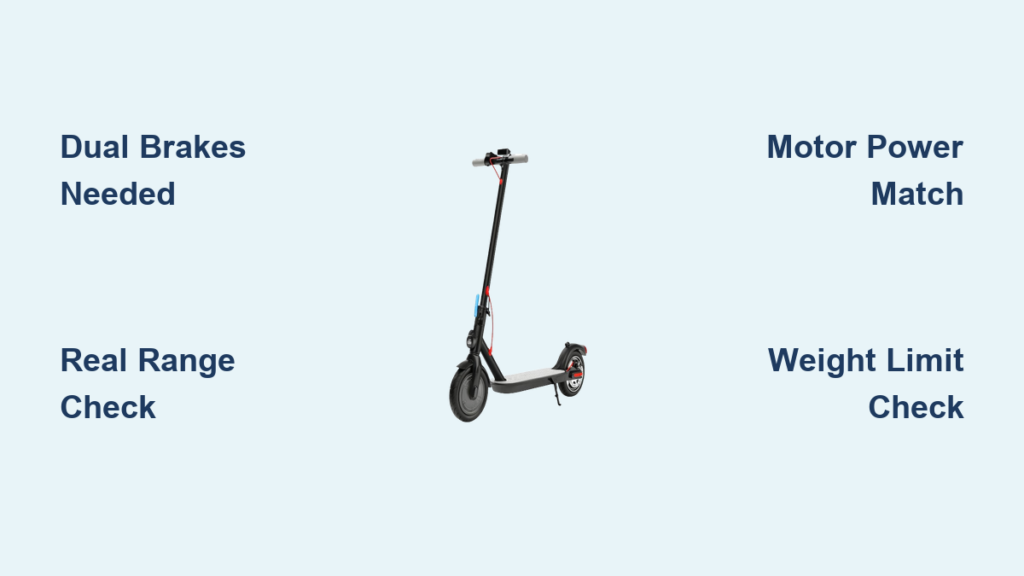
Always choose a scooter with one mechanical plus one electronic brake. Redundancy saves lives.
Tires: Air vs. Solid
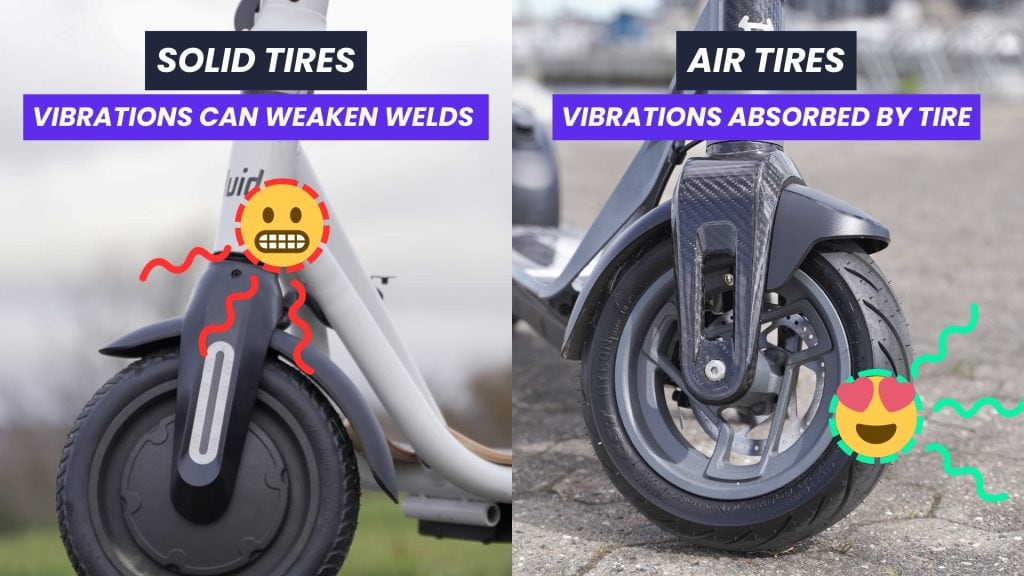
Pneumatic (air-filled) tires offer smooth rides, great traction, and bump absorption. Cons include puncture risk and pressure maintenance needs. Tubeless tires can self-seal small punctures. Best for commuting, rough roads, and all-weather use.
Solid (airless) tires have no flats and zero maintenance. Cons are harsh rides, poor grip, and bouncing on cracks. Common in budget scooters and rentals.
Front pneumatic plus rear solid is the best compromise under $1,000. Balances comfort with reduced maintenance.
Suspension: Is It Worth It?

Suspension smooths bumps, but cheap systems can rattle. Spring suspension is basic and affordable. Hydraulic or air suspension provides superior damping. Rubber (elastomer) is stiff but adjustable. Coil-over offers the best performance.
Avoid weak suspension on light scooters. Large pneumatic tires often provide better comfort than cheap springs.
Suspension is recommended for rough roads, riders over 180 lbs, and commutes over five miles.
Weight, Portability & Deck Design
Weight Limits and Carryability
Portability matters if you take public transit, live in an apartment, or store under a desk.
Weight guidelines: Under 30 lbs is easy to carry. 30–40 lbs is manageable for most. 40–60 lbs is hard to carry far. 60–100+ lbs requires storage space.
A practical rule: scooter weight should stay under 30% of your body weight for easy handling.
Folding Mechanisms & Storage
Look for one-step folding, secure latches, carrying handles or shoulder straps, and rolling wheels (like the Fluid Freeride Horizon). Test the fold before buying. Some designs are awkward or unstable.
Deck Size and Comfort
Large decks allow both feet flat with stable stance. Slim decks are portable but cramped for big feet.
Avoid decks with obstructed folding stems or rear wheels intruding on foot space. Surface must have grip tape or rubberized texture. Material should be aluminum alloy or steel. Avoid plastic decks.
Lighting, Visibility & Weather Resistance
Lighting for Night Safety
Minimum requirements are front white light and rear red light. Recommended additions for night riders include bright headlights (500+ lumens), stem lights, turn signals, and deck lights.
Pro tip: add flashing helmet or backpack lights. Stock rear lights are often too dim.
IP Rating: Water and Dust Proofing
IPx4 is splash-resistant and okay for light rain. IP54 is dust-protected and water-resistant. IP56 offers high protection for heavy rain. Never submerge or ride through deep puddles, even with high IP ratings.
Avoid no-name brands with fake IP claims.
Safety, Maintenance & Warranty
Must-Have Safety Gear
A helmet is non-negotiable. Add knee and elbow pads, gloves for grip and hand protection, and high-visibility vests or jackets. Statistics show 82.7% of scooter falls could be prevented with proper gear and technique.
Beginners should start slow, practice braking, and avoid traffic.
Maintenance Every 600 Miles
Check tire pressure and inspect for wear. Replace brake pads and tighten cables. Re-tighten bolts monthly. Secure fenders if loose.
Most repairs are DIY. Support from the seller is critical.
Warranty: What to Expect
Warranty duration ranges from six months to two years. Coverage typically includes frame, battery, motor, and controller. Top brands like NIU, Apollo, and Unagi offer two-year full coverage.
Buy from reputable distributors (Apollo, Fluid Freeride, VORO) for real support. Avoid AliExpress or Kickstarter for first-time buyers.
Where to Buy: Smart Purchasing
Best Purchase Channels
Domestic specialty distributors (Apollo, Fluid Freeride, VORO) offer expert advice, real warranty, parts, and support. Slightly higher prices are worth it for performance and long-term ownership.
Direct from manufacturers (Unagi, NIU, Segway) provides good service and direct warranty. Limited customization.
Amazon and big box retailers offer fast shipping and easy returns. No long-term support after 30 days. Only buy well-reviewed models from known brands.
Direct from China (AliExpress, Alibaba) has the cheapest prices but no warranty, slow shipping, and no parts. High risk.
Crowdfunding (Kickstarter) carries very high risk. Many projects fail or delay 1–2 years. Only invest if you can afford to lose the money.
Match Your Profile to the Right Scooter
Beginner and casual riders need stability and ease of use. Pick 250W–350W motors, solid or pneumatic tires, and under 30 lbs weight. Avoid high speeds and complex controls.
Daily commuters need reliability and portability. Pick 350W–800W motors, 15–20 mile range, foldable design, and IP54+ rating. Weight should stay under 40 lbs. Must-have features include dual brakes and good lights.
Heavy riders over 180 lbs need power and durability. Pick dual motors (1000W+), large pneumatic tires, and strong suspension. Weight capacity should exceed 250 lbs. Hydraulic brakes are essential.
Riders in hilly terrain need torque and climbing power. Pick dual motors, 1000W+, and disc brakes. Avoid single motors under 500W.
Performance enthusiasts need speed, range, and comfort. Pick dual motors (2000W+), 40+ mph speed, and 30+ mile range. Weight is secondary.
Trick riders need durability and agility. Pick aluminum or titanium frames, stiff decks, and hard wheels. Customizability matters.
Senior and mobility users need stability and comfort. Pick three-wheel options, low step-through, and easy controls. Prioritize safety and balance.
Final Tips: Avoid Costly Mistakes
Never overestimate range. Always halve the advertised range or apply the 60–70% rule. A 20-mile claim equals 12–14 miles real-world.
Never ignore weight. A 50+ lb scooter is hard to carry upstairs. Test the fold and lift before buying.
Avoid single electronic brakes. They’re unsafe above 15 mph. Always get dual braking (mechanical plus electronic).
Skip cheap suspension. Weak springs make rides worse. Large air tires often beat cheap suspension.
Steer clear of crowdfunding risks. Most projects fail or delay. Stick to established brands.
Frequently Asked Questions About Scooter Buying
What is the best scooter for commuting under $1,000?
The budget commuter tier ($500–$1,000) offers the best value for commuting. Look for 300W–800W motors, 15+ mile range, dual brakes, and front pneumatic tires. The Unagi E500 stands out with dual motors at this price point.
How far can I really ride on a single charge?
Real-world range is typically 60–70% of manufacturer claims. A scooter advertised as 25 miles likely delivers 15–18 miles in mixed conditions. Calculate your needs by doubling your daily round-trip and adding 20% buffer.
Do I need dual motors for hilly areas?
Yes, if you face steep hills or weigh over 180 lbs. Dual motors provide instant torque for climbing. Single motors under 500W struggle on inclines. Prioritize torque over top speed for hilly terrain.
Are electric scooters safe in the rain?
IPx4 rating handles light splashes. IP54 or higher is better for regular wet conditions. Never submerge your scooter or ride through deep puddles, regardless of IP rating.
How often do I need to maintain my scooter?
Average maintenance is needed every 600 miles or twice yearly. Check tire pressure, inspect brakes, and tighten fasteners monthly. Most basic repairs are DIY-friendly.
Key Takeaways for Finding Your Perfect Scooter
The best scooter isn’t the fastest or cheapest. It’s the one that fits your life. Match your scooter to your primary use: commuting, hills, tricks, or casual riding.
Apply the 60–70% rule to advertised range. Prioritize dual brakes for safety. Choose reputable brands with real warranty support. Test folding and weight before buying.
Use this scooter buying guide to cut through marketing lies, prioritize real performance, and invest in safety, reliability, and long-term value. Whether you’re commuting, cruising, or stunting, the right scooter is out there. Now you know how to find it.