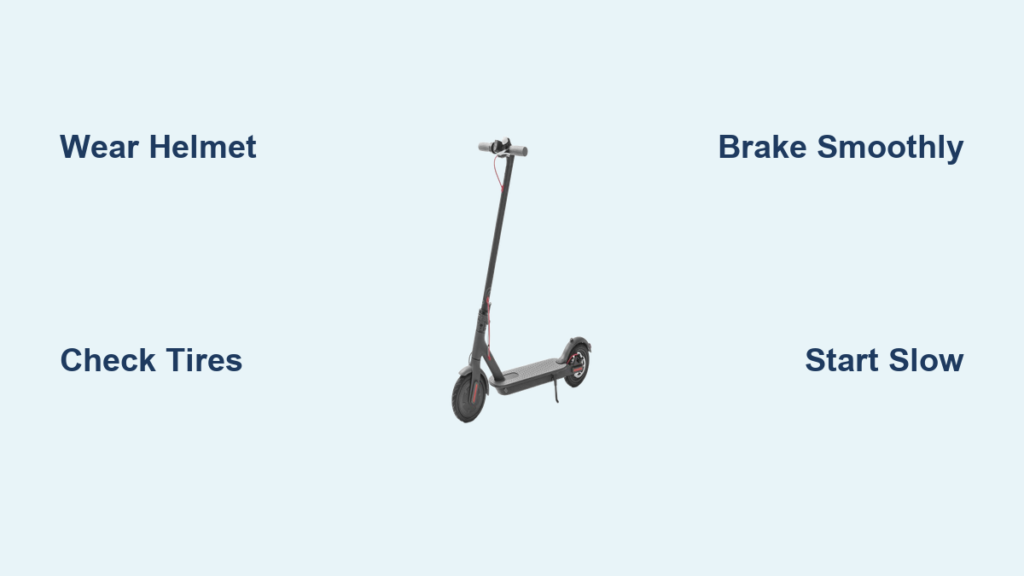
You’ve just unlocked a rental scooter or unboxed your first personal ride. The handlebars are in front of you, and the city is waiting. But before you twist the throttle and go, you need to know exactly how to operate a scooter safely. This guide walks you through every essential step, from strapping on a helmet to executing emergency stops, so you can ride with confidence from your very first mile.
Whether you’re mounting an electric commuter or a gas-powered scooter, the fundamentals remain the same. We’ll cover pre-ride inspections, stance and balance, throttle control, braking techniques, turning mechanics, traffic navigation, and weather considerations. By the end, you’ll have the skills to operate a scooter like an experienced rider.
Gear Up Before You Ride
Protective gear is your first line of defense against injury. At speeds of 15 to 50 mph, a fall can cause serious harm. Skipping gear isn’t worth the risk.
Wear a Helmet Every Single Ride
A helmet is non-negotiable. It reduces the risk of fatal head injury dramatically. Choose a CPSC-certified bike helmet as a minimum. For higher-speed scooters exceeding 25 mph, a full-face motorcycle helmet provides superior protection against facial injuries and road rash. The chin strap must be secured snugly.
Dress for Protection, Not Style
Long sleeves and pants shield your skin from road rash if you fall. Closed-toe shoes are mandatory. Flip-flops can slip off or jam the brake. In cold weather, wear an infinity scarf under your helmet to block wind. Waterproof gloves, like MTB-style options, protect your hands during instinctive falls.
Make Yourself Visible to Others
Turn your headlights on, even during daylight hours. Many scooters have daytime running lights, but manually activating them ensures maximum visibility. Use high beams when conditions warrant. Sunglasses help with glare but never replace proper eyewear.
Perform a Pre-Ride Inspection

Never skip the pre-ride check. A few minutes of inspection prevents mechanical failures mid-trip.
Check Tires and Inflation
Inspect tires for cracks, embedded debris, or worn treads. Under-inflated tires reduce range and make handling sluggish. For pneumatic tires, verify proper inflation before every ride. Solid tires need inspection for cuts or warping.
Lock the Folding Mechanism
Most scooters fold for storage. Before riding, confirm the stem and handlebars are fully locked. Listen for the audible click or check visual indicators. Engage any secondary latches. A loose joint can collapse while you’re riding, especially over bumps.
Test Brakes and Power
Squeeze both brake levers. They should engage smoothly without grinding or sticking. Test front and rear brakes individually. Check the battery level on electric scooters. Don’t start a trip with less than 20% charge unless it’s a short hop.
Understand Your Controls and Dashboard

Your scooter communicates everything through its dashboard. Learning to read it keeps you safe and informed.
Read the Instrument Panel
The speedometer keeps you aware of your speed and legal. The battery or fuel gauge shows remaining range. On gas scooters, a red light may signal low oil or the need for fuel. Turn signals, headlight indicators, and your horn location complete your communication toolkit.
Master the Starting Procedure
Gas Scooter Startup
Insert the key and turn to ON. Press either brake lever. Hold the start button while giving a slight twist of the throttle to help ignition. Once running, release the button. To shut off, turn the key to OFF.
Electric Scooter Startup
Most e-scooters require brake depression to power on. For kick-to-start models, push off manually until you reach approximately 3 mph, then the motor engages. For zero-start models, twist or press the throttle while stationary. Test throttle sensitivity slowly, as some models deliver sudden torque.
Find Your Stance and Balance
Proper stance forms the foundation of control. Getting this right makes everything else easier.
Determine Your Foot Position
Are you regular (left foot forward) or goofy (right foot forward)? This depends on your natural balance. Once you decide, keep it consistent. Place your leading foot near the front of the deck and your rear foot on the tail or brake cover.
Use the Most Stable Stance
The standard stance places your front foot forward on the deck and rear foot on the tail. This gives the best weight control for acceleration and braking. On wider decks, a V-shape stance with feet slightly outward stabilizes your hips and knees at speed. Avoid standing with feet side by side, as this limits your ability to shift weight quickly.
Launch Smoothly Every Time
Stand beside the scooter on flat ground. Raise the kickstand with your left foot. Step on with your leading foot. Push off with your trailing foot or engage the zero-start throttle. Once moving at approximately 3 mph, bring your second foot onto the deck. Keep your knees bent and eyes forward.
Accelerate with Control
Smooth acceleration prevents wheel spin and maintains stability. Jerky throttle input is a common cause of falls.
Apply Throttle Gradually
Twisting too hard causes wheel spin or backward tipping, especially on high-torque models. Apply throttle smoothly and let the motor build speed without jerking. On electric scooters with multiple power modes, start in Eco mode until you’re comfortable.
Shift Your Weight Forward
During acceleration, shift your weight slightly forward to keep traction on the front wheel. Plant your rear foot firmly to avoid pulling on the handlebars. Bend your knees to lower your center of gravity, which improves balance and helps you absorb bumps.
Extend Battery Life with Smart Starts
If your scooter allows kick-starting, use it. Manual push-off reduces battery drain during the high-energy launch phase. This small habit can extend your range by 10 to 15% over time.
Brake Like a Pro
Braking is the most critical skill for rider safety. Poor braking technique causes the majority of accidents.
Shift Weight Back When Stopping
Hard braking throws your body forward. To avoid flipping over the handlebars, shift your weight back and down, bending your knees as if sitting into a chair. Keep your chest up and arms loose. This technique maximizes rear wheel grip and keeps you planted.
Use Both Brakes Together
The front brake provides approximately 70% of stopping power. The rear brake provides stability. Always use both. Squeeze progressively rather than slamming. On wet or loose surfaces, rely more on the rear brake to prevent front-wheel skids.
Execute an Emergency Stop
First, straighten the scooter. Do not brake while turning. Second, shift your weight back. Third, apply both brakes firmly but progressively. Fourth, keep your eyes ahead. Target fixation means you’ll go where you look, so focus forward.
Turn with Confidence
Turning technique must change based on your speed. What works at 10 mph won’t work at 30 mph.
Adjust Steering to Your Speed
At low speeds under 10 mph, turn the handlebars actively and lean slightly. At medium speeds between 10 and 20 mph, use your core rather than your arms and stay relaxed. At high speeds above 20 mph, your hips lead the turn with minimal handlebar movement. This is counter-steering in action.
Practice Counter-Steering at Speed
To initiate a sharp turn at high speed, push the handlebar opposite to your desired direction. For example, push right to go left. This kicks the front wheel out and forces your body to lean into the turn. It feels counterintuitive at first but becomes second nature with practice.
Avoid Common Turning Mistakes
Leaning too far on rough roads causes loss of grip. Violent handlebar turns act like instant brakes. Knee swaying destabilizes your hips. Keep your knees fixed in a V-shape and make smooth inputs only.
Ride Smart in Traffic
Urban riding demands awareness and defensive habits. Cars often fail to see scooters.
Start in Safe, Open Areas
Never learn in traffic. Begin in empty parking lots or quiet streets. Practice figure-eights, slow turns, and emergency stops. Build low-speed control before hitting busy roads. Confidence comes from repetition.
Assume Drivers Cannot See You
Ride like you’re invisible. Keep a hand on the brake in cities. Signal every turn, even when no one seems around. Make eye contact with drivers at intersections. Stay out of blind spots.
Navigate Dense Urban Traffic
In chaotic cities, expect sudden overtakes from both sides. Ride on the left if local law requires it. Keep bags under the seat rather than on your shoulders to avoid bag snatchers. Stay predictable. Sudden moves increase crash risk.
Handle Weather and Surface Conditions

Environmental conditions change how you operate a scooter. Adjust your technique accordingly.
Ride Safely in the Rain
Wet roads mean slippery brakes. Reduce your speed significantly. Avoid sudden stops. Wipe the seat and handlebars before riding. If your scooter lacks an IP rating for water, avoid heavy rain. After a wet ride, dry it thoroughly, especially around the brakes and battery.
Adjust for Cold Weather
Below 50°F, battery range drops temporarily. Dress in layers. Use an infinity scarf under your helmet. Gloves prevent numbness and maintain grip. Cold tires have less traction, so accelerate and brake gently.
Tackle Loose Surfaces
On gravel or sand, slow down early. Use the rear brake only. Keep your weight centered. Avoid sharp turns. Front-wheel skids are common in loose conditions, so stay calm and ease off the throttle.
Park and Secure Your Scooter
Proper parking prevents your scooter from being towed or stolen.
Choose Legal, Safe Spots
Never block sidewalks, doors, or ramps. Use designated scooter or bike racks. On hills, engage the parking brake if equipped and deploy the kickstand. Ensure the scooter is fully stable before walking away.
Lock It Properly
Use a U-lock, not a cable lock. Loop it through the frame and a fixed object like a bike rack. Avoid locking only the wheel. If possible, bring the scooter indoors, especially after wet rides, to prevent rust and battery damage.
Master Advanced Maneuver
Once you’ve mastered the basics, these skills add control and confidence.
Learn the Bunny Hop
This trick helps you clear curbs and debris. Bend your knees deeply. Push down with your back foot and jump up. Pull up on the handlebars to lift the front wheel. Level out and land softly with both wheels. Practice at low speed on grass first.
Recover from Wobbles
If the scooter shakes at speed, keep your eyes forward. Tuck your elbows in. Slight acceleration often stabilizes the front end. If you lose balance at low speed, put a foot down immediately.
Avoid Common Mistakes
These errors cause most scooter accidents. Steer clear of them.
Never Over-Throttle
Sudden power causes wheelies or backward falls, especially on powerful models. Smooth input wins every time.
Never Panic Brake
Slamming the brakes locks wheels and ejects riders. Always apply pressure gradually. Practice emergency stops in a safe zone.
Stay Sober
Alcohol slows reaction time and impairs judgment. Even one drink increases risk significantly. Never ride after drinking.
Know Your Scooter’s Limits

Match your scooter to your skill level. Powerful machines demand experienced hands.
| Model | Top Speed | Best For |
|---|---|---|
| CityRider | 18 mph | Beginners |
| Horizon | 25 mph | Intermediate riders |
| WideWheel Pro | 26 mph | Urban riders |
| Mantis | 40 mph | Experienced riders |
| WolfWarrior | 50 mph | Experts only |
Start with a moderate-powered scooter. A 500W model reaching 25 mph offers plenty for most city use.
Follow the Final Ride Protocol
Develop a consistent routine before every ride.
- Gear up with helmet, gloves, and closed-toe shoes.
- Inspect tires, brakes, fold-lock, and battery.
- Start using the correct procedure for your scooter type.
- Launch smoothly by pushing off or using zero-start.
- Accelerate gradually while bending your knees and leaning forward.
- Cruise while looking ahead and keeping hands near brakes.
- Stop by shifting weight back and applying both brakes progressively.
- Park with the kickstand down, lock secured, and scooter stored dry.
Frequently Asked Questions About How to Operate a Scooter
Do I need a license to operate a scooter?
Requirements vary by location. Many areas require a driver’s license or special moped permit. Riding without proper licensing can void insurance coverage in case of accidents.
How do I start an electric scooter?
Most electric scooters require you to press the power button while depressing a brake lever. Then either kick-start by pushing off to around 3 mph or use zero-start by twisting the throttle from a standstill, depending on your model.
Which foot should go forward when riding?
This depends on whether you’re regular (left foot forward) or goofy (right foot forward). Test both positions to see which feels more natural and stable.
How do I brake safely on a scooter?
Shift your weight back and down, bend your knees, and apply both brakes smoothly. Never slam the brakes or brake while turning.
Can I ride a scooter in the rain?
It depends on your scooter’s IP rating. If rated for water exposure, reduce speed and avoid sudden stops. If not rated for water, avoid rain entirely and dry the scooter thoroughly after any wet exposure.
Key Takeaways for Operating a Scooter
Operating a scooter safely requires proper gear, mechanical awareness, and practiced technique. Always wear a helmet, perform pre-ride inspections, and start in controlled environments before venturing into traffic. Master throttle control, braking technique, and turning mechanics step by step. Match your scooter to your skill level, and never ride under the influence. With these habits, you’ll enjoy fast, efficient, and safe rides every time you hit the road.