You’ve just bought your first scooter or are getting ready for a ride after winter storage. You hop on, insert the key, and press the start button. Nothing happens. Frustrating, right? Most of the time, the issue is not mechanical. It is a simple step missed in the electric start process.
How to start a scooter with electric start safely and reliably involves more than just pressing a button. Whether you are riding a gas-powered 50cc commuter or a high-torque 300cc model, modern scooters use built-in safety interlocks that prevent starting unless specific conditions are met. The same applies to electric scooters with push-button ignition systems. Skipping any one of these steps, like forgetting to pull the brake or leaving the kill switch off, will result in a no-start situation.
In this guide, you will learn the exact sequence to start any scooter with an electric starter, including gas and electric models. You will discover common mistakes riders make, how to troubleshoot when the engine will not turn over, and essential post-start steps for long-term reliability. By the end, you will be able to fire up your scooter confidently every time, no guesswork, no frustration.
Verify Ignition and Safety Switches
Before touching the start button, ensure all electrical and safety systems are properly engaged. Most failed starts happen because one of these three elements is overlooked.
Turn Key to On Position
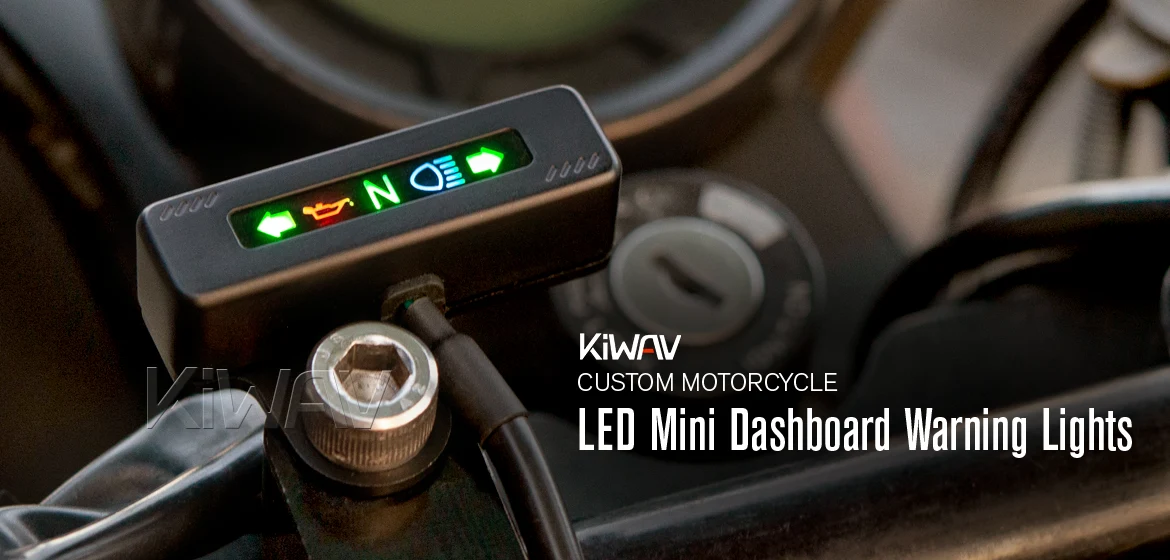
Insert the ignition key and rotate it one click to the right into the On position. This powers the scooter’s electrical system. Look for dashboard lights. Fuel gauge, battery indicator, or engine warning lights should illuminate. If nothing lights up, check the battery charge or fuse connections.
Warning: Leaving the key in the On position without starting drains the battery. Never leave it powered on for more than a few minutes.
Set Kill Switch to Run Mode
Locate the red emergency shutoff, also called the kill switch, near the right handlebar. It must be set to the O circle symbol or half-C symbol. This is the Run position. If the X is facing up, the engine circuit is disabled. No amount of button pressing will start the scooter.
This is one of the most commonly missed steps, especially by new riders. Always double-check this switch before troubleshooting further.
Confirm Electric Scooter Power Activation
For pure electric scooters, there is no key. Instead, press and hold the power button, usually on the handlebar or deck, for 3 to 5 seconds until the display screen activates. Some models require a physical key or remote fob to enable power first.
Check the battery level on the display. If it is below 20 percent, charge before attempting to start.
Ensure Proper Stability and Positioning
Scooters are designed with safety interlocks that require stable positioning before allowing engine startup. Ignoring these can lead to tipping or unintended movement.
Place Scooter on Center Stand
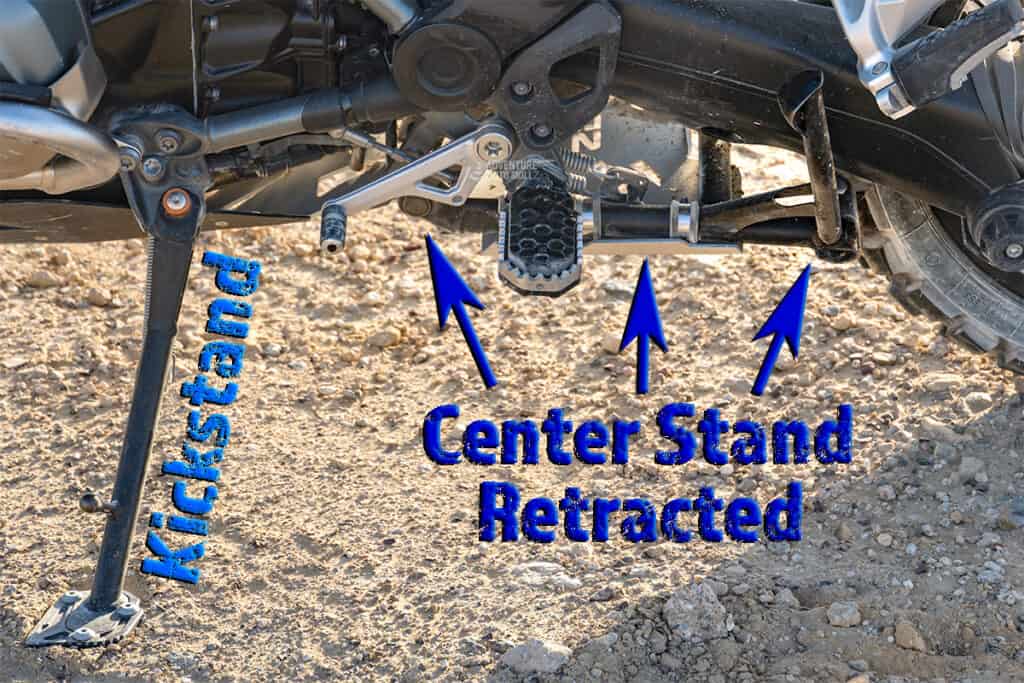
Always start your scooter while it is on the center stand. This keeps the vehicle upright and stable, especially important when applying throttle during cold starts. Starting on the side stand increases the risk of tipping, particularly on uneven ground.
For electric scooters, ensure the kickstand is fully retracted if equipped. Some models disable the motor when the stand is down.
Engage the Brake Lever
You must squeeze either the front or rear brake lever to activate the starter. This is a mandatory safety feature to prevent accidental forward lurch when the engine fires.
Recommended: Use the left rear brake lever. This frees your right hand to twist the throttle slightly while pressing the start button.
Visual cue: The brake lights should illuminate when the lever is pulled. If they do not, the micro-switch may be faulty.
Pro Tip: Make brake engagement part of your muscle memory. Pull brake, press start. It becomes automatic with practice.
Execute Electric Start Sequence
Now that all pre-start conditions are met, follow the correct procedure based on your scooter type.
Start Gas-Powered Scooters (50cc to 300cc)
Follow these steps precisely for reliable ignition.
- Final Check: Key On, kill switch Run, scooter on center stand, brake engaged.
- Cold Engine Throttle Twist: If the engine is cold, give a slight twist of the throttle before pressing start. This enriches the fuel mixture for easier ignition.
- Press Yellow Start Button: Hold the yellow starter button on the right handlebar.
- Hold for 5 to 10 Seconds: Keep the brake and button pressed until the engine fires. Do not exceed 10 seconds. This prevents starter motor overheating and battery drain.
- Stabilize RPMs: Once running, maintain a slight throttle for 5 to 10 seconds to keep the engine from stalling.
- Idle Warm-Up: Let the engine idle for 30 to 60 seconds. Modern scooters use automatic chokes. This warm-up cycle lets the system adjust fuel delivery.
Time Tip: The entire start process should take less than 90 seconds when done correctly.
Start Pure Electric Scooters
Electric scooters start differently. No cranking, just instant power.
- Check Battery Level: Ensure at least 30 percent charge. Low voltage can prevent startup.
- Power On System: Press and hold the power button until lights or display activate.
- Select Drive Mode: If your scooter has multiple modes like Eco, Standard, or Sport, start in Eco or Low mode for smoother takeoff.
- Push-Off (If Required): Some models, certain Xiaomi or Segway models, need a gentle foot push to initiate motion before throttle response.
- Apply Throttle Gradually: Twist or press the throttle slowly. Sudden input can trigger safety cut-offs.
Note: If the scooter beeps or flashes error codes, consult the manual. This often indicates sensor or connection issues.
Handle Difficult Starts and Adjustments

Sometimes, even with correct procedure, the engine resists starting. These advanced tips help overcome stubborn ignition.
Use Starting Fluid for Cold Engines
If the engine turns over but will not catch, especially after storage or in cold weather, use starting fluid to enrich the air-fuel mix.
Application Point: Spray a one-second burst into the intake port.
- 50cc Models: Access through the air filter housing.
- 150cc+ Models: Locate near the throttle body.
Caution: Overuse can flood the engine or damage internal components. Use only as a last resort.
Never spray starting fluid into an electric scooter. This applies only to gas-powered engines.
Adjust Idle Speed to Prevent Stalling
If the engine starts but dies when you release the throttle, the idle speed is likely too low.
- Locate Idle Screw: Find the golden-colored screw near the carburetor or throttle body, often under the seat.
- Adjustment:
– Turn clockwise to increase idle speed.
– Turn counterclockwise to lower it. - Target RPM: Aim for a smooth, steady idle, typically 1,200 to 1,500 RPM. The engine should run without throttle input.
Expert Note: Adjust idle only when the engine is warm. Cold engines naturally idle higher.
Troubleshoot Common Start Failures

When the starter button does nothing, do not panic. Over 90 percent of no-start issues stem from three simple causes.
No-Start Triad Checklist
Before assuming mechanical failure, verify these three items:
- Is the key in On? Dashboard lights must be on.
- Is the brake pulled? Brake lights should illuminate.
- Is the kill switch set to O? The X disables ignition.
These three steps resolve most startup problems instantly.
Diagnose Electric Start Issues
| Symptom | Likely Cause | Fix |
|---|---|---|
| Clicking sound, no crank | Weak or dead battery | Charge or replace battery |
| No response, no lights | Blown fuse or disconnected battery | Check fuse box and terminals |
| Starter spins, engine will not catch | Fuel delivery or spark issue | Check fuel line, spark plug, air filter |
| Brake lights not working | Faulty micro-switch | Adjust or replace brake switch |
For electric scooters, consider these additional points:
- Display shows error code? Refer to model-specific manual.
- Power button unresponsive? Check battery connection and reset procedure.
Use Kick Start as Backup
If the electric starter fails, most gas scooters have a kick start as a backup.
Kick Start Procedure
- Ensure Conditions: Kill switch Run, brake engaged, key On.
- Position Scooter: On center stand.
- Pull Lever Out: Extend the kick starter fully.
- Kick Firmly: Deliver a sharp, quick motion. Do not ease into it.
- Repeat: Try 2 to 3 times. If no start, revert to electric start or inspect fuel and spark.
Pro Tip: Use kick start to conserve battery if you are jump-starting or in a remote area.
Follow Correct Shutdown Routine
Proper shutdown protects your scooter’s electrical system and prevents accidental starts.
Safe Shutdown Steps
- Flip Kill Switch to X to instantly cut engine power.
- Turn Key to Off to disable all electrical systems.
- Remove Key to prevent theft and battery drain.
Best Practice: Always shut off with the kill switch first. It is faster in emergencies.
Open Pop-Seat Trunk
Need to access storage? Unlock method varies by model.
- 50cc Scooters: Insert key into left-side lock, turn to release.
- 150cc+ Scooters: Turn latch on right side to the left. Seat pops open.
Maintain for Reliable Starts
Long-term reliability depends on basic maintenance, especially during the break-in period.
Perform First Oil Change
After the first 30 minutes of riding, change the engine oil.
- Use 10W30 motor oil that meets most scooter specifications.
- Why it matters: Break-in generates metal shavings. Leaving old oil in damages engine longevity.
Skipping this step can reduce engine life by up to 50 percent.
Follow Warm-Up Best Practices
- Wait 30 to 60 seconds before riding.
- Avoid full throttle during first minute.
- Let automatic choke disengage naturally.
Immediate hard acceleration leads to stalling and poor fuel efficiency.
Key Takeaways for Starting Your Scooter with Electric Start
Knowing how to start a scooter with electric start is not just about pressing a button. It is about understanding the safety systems, correct sequence, and common pitfalls. Whether you are on a gas-powered commuter or a high-tech electric model, following the right steps ensures a smooth, reliable start every time.
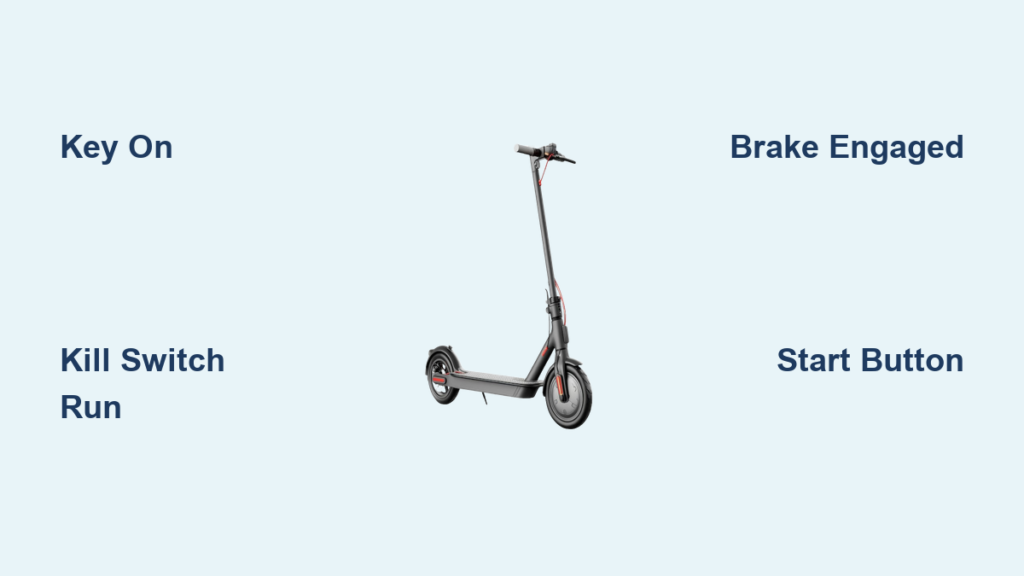
Keep this routine in mind. Key On, Kill Switch Run, Brake Engaged, Start Button, Warm Up. With practice, it becomes second nature. And if things go wrong, use the No-Start Triad Checklist. It solves most issues in under a minute. Regular maintenance, especially the first oil change, keeps your scooter running strong for years. Now go ride with confidence.
Frequently Asked Questions About Starting a Scooter with Electric Start
Why will my scooter not start when I press the electric start button?
The most common reasons are that the brake lever is not pulled, the kill switch is set to the X position, or the key is not fully turned to On. Check these three items first before assuming a mechanical failure.
Do I need to pull the brake to start my scooter?
Yes. Pulling either the front or rear brake lever is a mandatory safety interlock on all modern scooters. The starter will not engage without brake engagement.
How long should I hold the start button?
Hold the start button for 5 to 10 seconds maximum. If the engine does not start within that time, release the button and try again. Holding it longer risks overheating the starter motor and draining the battery.
Can I start my scooter on the side stand?
It is not recommended. Starting on the center stand provides stability and prevents tipping, especially when applying throttle during cold starts.
What should I do if my scooter starts but immediately stalls?
This usually indicates the idle speed is too low. Locate the golden idle screw near the carburetor and turn it clockwise slightly to increase idle RPM. Also ensure you are allowing the 30 to 60 second warm-up period.
Is the kick start still usable if the electric starter fails?
Yes. Most gas-powered scooters have a kick start as a backup. Ensure the kill switch is in Run position, apply the brake, and deliver a sharp kick to the starter lever.